Dating as a Woman in Oslo: The Truth Behind the Silence
L'Amore Vince: The Best Dating App For Single Working Professionals In Oslo Norway
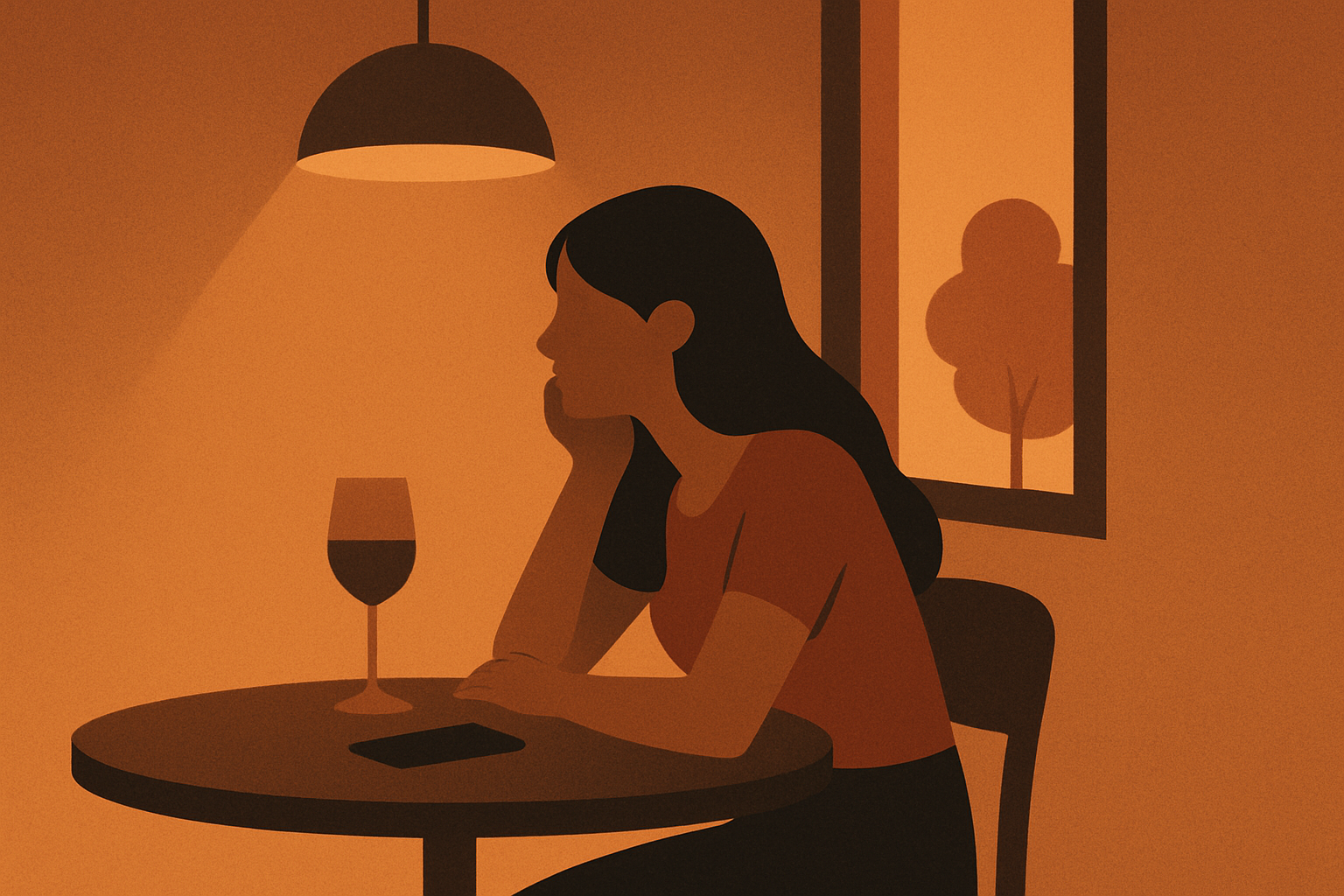
The City Where Nobody Asks You Out
You can sit alone at Fuglen on Universitetsgata for two hours on a Friday evening — good lighting, a natural opening — and leave having exchanged nothing but a nod with the bartender. Not because you were unapproachable. Not because Oslo men are uninterested. But because approaching a stranger in public is, in this city, quietly understood to be an imposition. It carries a faint social charge, an assumption of desperation or aggression, that most Norwegians would rather avoid entirely. This is not shyness. It is something more structured than that. It is cultural architecture.
For women dating in Oslo, that architecture shapes everything. The rules here are real, unwritten, and rarely explained to outsiders. If you have moved here from southern Europe, from Latin America, from anywhere that runs warmer and louder, the silence can feel like rejection before anything has even started. And if you grew up here, you may have simply accepted that romantic possibility happens inside tight social circles — work colleagues, university friends, friends of friends gathered at someone's cabin in Nordmarka — and almost nowhere else.
What the Janteloven Does to Romance
The concept of Janteloven — the unspoken Scandinavian principle that discourages anyone from believing they are special or better than others — is often discussed in professional contexts. Its effect on dating is less examined but just as real. Expressing strong romantic interest openly can feel like a violation of the norm. To say, plainly, "I like you and I would like to see you again," is a level of self-disclosure that many Oslo men find genuinely uncomfortable to perform. The result is often a prolonged ambiguity that women in Oslo know intimately: weeks of companionable hanging out, shared Spotify playlists, Friday beers in Grünerløkka, and still no clear signal of whether this is friendship or something else.
This ambiguity is not malicious. But it is exhausting. Women here frequently describe the sensation of having to do the emotional labour of interpreting silence, of reading context clues the way you would read a legal document. Is the fact that he suggested Mathallen on a Saturday morning a date? Or is this just what Oslo people do on Saturdays? The city gives you very few clear signals.
The Equality Paradox
Norway scores among the highest in the world for gender equality, and Oslo embodies that genuinely. Splitting bills is not a gesture here — it is a baseline expectation and one that most women in this city are completely comfortable with. The deeper gender dynamics, however, are more complicated than the statistics suggest.
Because the city is deeply egalitarian in its values, there is also an assumption that women should be equally unbothered, equally low-maintenance, equally undemanding of emotional expression. Wanting warmth — wanting someone to say they want you, specifically — can be quietly coded as neediness. Women who have dated across Norwegian and non-Norwegian communities in Oslo often note this dissonance: the city is politically feminist but emotionally reserved in ways that can work against women's actual romantic needs.
"The first man who told me he found me beautiful was visiting from Portugal. My Norwegian friends thought it was too much. I thought it was just enough." — a woman who has lived in Tøyen for six years
The App Problem, Specifically Here
Dating apps are, in Oslo, extremely widely used — arguably more so than cold approaches, precisely because they provide the buffer of digital distance that reduces the social risk of expressing interest. But the standard photo-first format creates its own particular distortions in this city.
Oslo has a pronounced aesthetic conformity in how people present themselves online. The same Nordmarka hiking photo. The same Aker Brygge summer shot. The same flat-lay of coffee and a novel. The visual sameness makes it genuinely difficult to distinguish personality from curation. And for women, the photo-first model concentrates attention on appearance in a way that sits awkwardly against the city's stated values. You are, in effect, being swiped on looks in a city that prides itself on not caring about looks.
Beyond that, the conversion rate from match to actual conversation in Oslo is notoriously low. The cultural reluctance to express direct interest does not disappear because you are behind a screen. Matches accumulate. Messages do not. Women here often describe managing dozens of matches with whom they have exchanged fewer than five words — a peculiar digital version of the same ambiguous silence they experience in Grünerløkka bars.
Safety Is Not Abstract Here
Oslo is a physically safe city by most measures, but that does not mean women's safety concerns in dating are abstract. The particular anxieties are recognisable: meeting someone from an app for the first time, handing over personal contact details too early, not knowing whether the person on the other side of the conversation is who they say they are. These concerns are universal, but Oslo women have a very specific version of them given how much dating has migrated online here and how little vetting typically happens before a first meeting.
The city also has a particular geography that shapes first-date vulnerability. If you live in Majorstuen and you are meeting someone you connected with online at a bar in Torshov, you are crossing a meaningful physical distance on the basis of almost no verified information. That is a small but real calculation women in Oslo make constantly.
What Oslo Women Actually Want
Conversations with women across different neighbourhoods — from the younger creative community in Vulkan to the more established professional crowd around Frogner — surface some consistent threads. They are not asking for grand gestures. They are not asking for the performative romance that other cultures sometimes export. What they describe wanting is simpler and more specific:
Clarity. Someone who says what they mean without three weeks of interpretive guesswork.
Substance. Conversations that go somewhere, that reveal character, before physical attraction becomes the whole story.
Safety without paranoia. The ability to get to know someone before handing over personal details or committing to a physical meeting.
Knowing who they are actually talking to. Verification that the person is real, consistent, and present.
These are not extravagant requests. They are structural ones. They are about the conditions under which connection becomes possible — and they point to a gap between what standard dating apps offer and what the actual experience of dating in Oslo, as a woman, requires.
A Different Kind of Structure
Oslo is, in many ways, a city that already understands the value of process. Norwegians are comfortable with structure, with clear stages, with knowing what is expected at each step. It is arguably part of why the culture works as well as it does. That same instinct, applied to dating, suggests that a staged approach — one where you learn about a person before you see them, where each step is deliberate and consented to — might actually fit this cultural context better than the chaos of swipe-first apps.
L'Amore Vince is built around exactly that kind of progressive structure. Matched users connect first through text, then voice, then video, then — only if both people choose it — contact exchange, with a masked forwarding number available so nobody is forced to hand over a real number to someone they are still getting to know. A compatibility score is built from personality questions rather than photographs. Every user completes a daily liveness check-in that creates a visible verified streak, so when you are talking to someone in Oslo at midnight from your apartment in St. Hanshaugen, you know you are talking to a real person who showed up again today. For women navigating a city where ambiguity is structural and verification is often absent, that kind of built-in accountability is not a small thing.
Oslo's romantic culture already knows that the best connections take time and that imposing yourself too quickly is a violation of something important. L'Amore Vince simply builds that knowledge into the design — and gives women the conditions they have been asking for all along.
Bài viết liên quan
Dating in El Paso as a Woman: The City That Walks You Home
By late Sunday afternoon in El Paso the grill smoke stands over whole neighborhoods at once, the Lower Valley, the Northeast, the westside cul-de-sacs, and inside that smoke, at folding tables in backyards, sits the institution that actually governs a woman’s romantic life here: her grandmother.…

Dating in Portland, Maine as a Woman: Small Harbor, Long Memory
On a Saturday night in July, Wharf Street is wall to wall with bachelorette parties, sashes and matching shirts and men down from elsewhere shouting compliments that nobody requested, and a Portland woman threading through it is usually on her way somewhere else. Come back to the same cobblestones…
Dating in Provo as a Woman: The Ward Calendar and the Dirty Soda
At nine on a weeknight the drive-through line at a Provo soda shop runs ten cars deep, and a fair share of those cars are dates. The dirty soda, a fountain drink dressed with cream and syrup and lime, is Utah County’s answer to the cocktail, invented for a population that does not drink alcohol or…
Comments
Tham gia bình luậnHãy là người đầu tiên bình luận.