Dating in Corrientes as a Woman: Guainas, Chamamé, and Who Is Watching
L'Amore Vince: The Best Dating App For Single Women In Corrientes
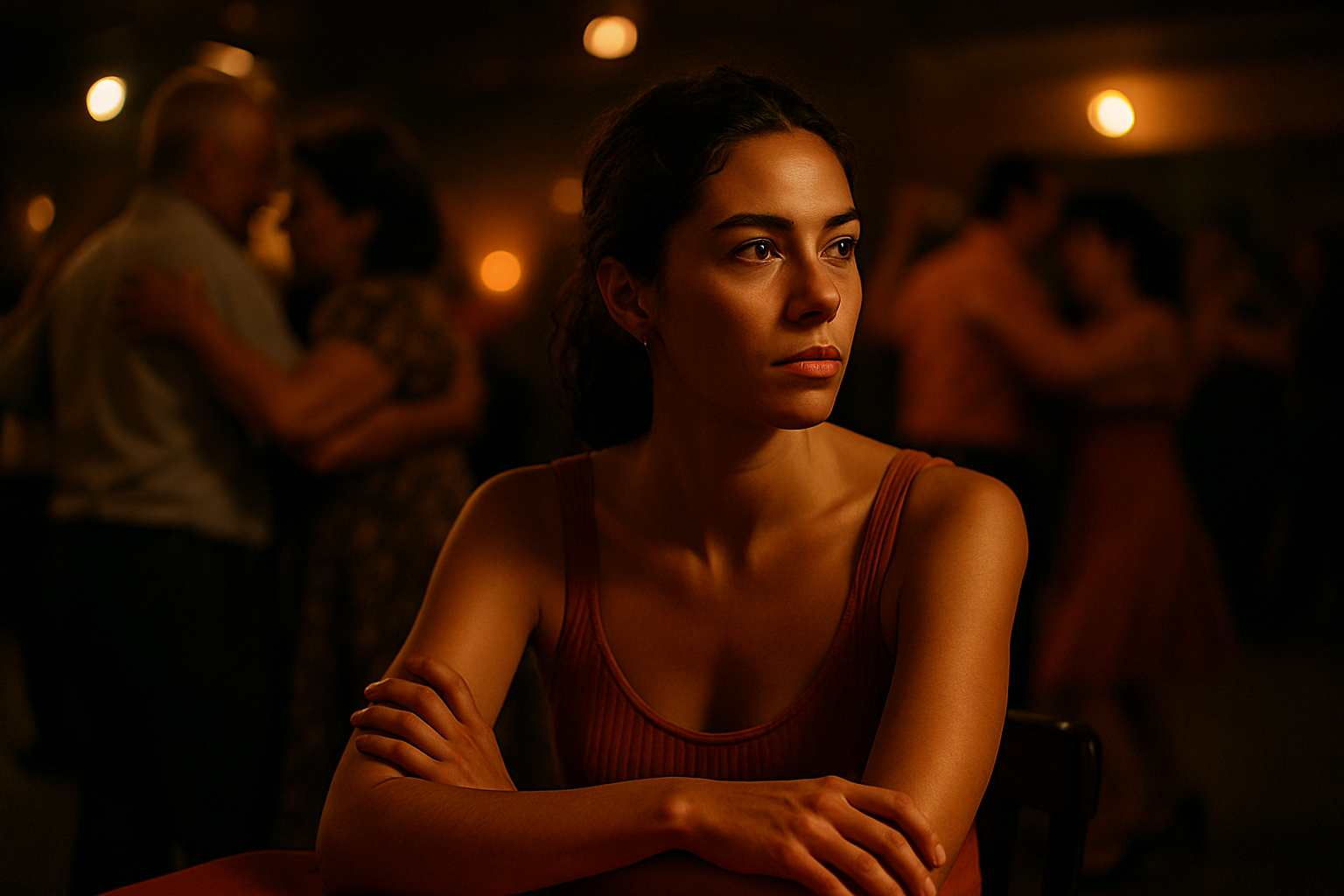
Chamamé is danced in an embrace, and the embrace has a governor. The woman’s left forearm rests against the man’s shoulder or chest, and its pressure sets the distance between the two bodies, a fact every correntina learns young and every correntino learns to respect without being told. The dance floor at a peña or a family party is therefore not the free-for-all a visitor might assume from the closeness of the hold. It is a small system of consents, adjusted in real time, and the etiquette around it is settled: asking a woman to dance is ordinary, being declined is ordinary, and taking the decline badly is the only real offence available. If you want to understand what dating in Corrientes is like for women, start with that forearm. Very little in the province is negotiated more explicitly.
Guaina
The correntino word for a young woman is guaina, out of the Guaraní that runs underneath the province’s Spanish, and it is worth knowing because the whole romantic vocabulary here tilts local. Chamamé lyrics are full of guainas, the language of endearment borrows Guaraní freely, and a woman grows up inside a song tradition in which she is, frankly, the subject a great deal of the time. Correntinas hold this lightly. Being serenaded by a culture is pleasant in the abstract and beside the point on a Tuesday, and the practical texture of a guaina’s week is the same mix as anywhere in the litoral: work or study, the family table, the tereré circle in the evening heat, and a nightlife district where the city’s watchfulness thins out for a few hours before reasserting itself by Sunday lunch.
The comparsa is work
Carnival is the season everyone asks women about, and the first thing correntinas correct is the assumption that glitter means availability. Dancing in a comparsa is work: months of rehearsal, costumes that consume real money, a discipline closer to sport than to party, and very often a family project in which mothers sew, daughters dance and grandmothers hold opinions about both. The women on the passarela are performers inside an institution, and the city knows the difference even when visitors do not. The flirtation of carnival happens where it always happens, in the stands and the street, inside groups, with the licence of the season and the limits everyone understands. Locals distinguish between carnival romances and romances that merely started at carnival, and women draw that line at least as coolly as men, since they are the ones the season’s mythology is mostly about. It helps to remember who is actually in the stands watching a dancer on the passarela, which is, as often as not, her own family, seated, fed and holding the good camera.
The watching city
Corrientes is big enough to hold strangers and too small to keep them. Surnames travel, barrios remember, and a woman’s comings and goings are noticed in a way that porteñas find suffocating and correntinas mostly find unremarkable, because the noticing is the water they swim in. The weight of it varies sharply by class and barrio, heavier in the traditional families of the old centre, lighter in student circles and the newer neighbourhoods, and any honest correntina will tell you both versions exist in the same city at the same time. The watching has uses. Somebody always knows who he is, what happened with the last one, and whether his family is serious, and that intelligence flows to women through channels no app has replicated, the aunts, the neighbours, the friend of his cousin. The price is symmetrical, since the same channels carry information about her, and a badly ended relationship stays in the record.
The costanera after dark
The evening costanera is as mixed a space as the province owns, runners and families and mate circles well into the night, and women use it at all the hours the city itself is awake. The nightlife proper concentrates in the strip of bars and boliches the students keep, and the practical habits there are the national ones, the group, the shared ride home, the message on arrival, kept as routine rather than ceremony. The hour that actually empties the city is the siesta, when the heat closes the shops and the streets belong to nobody, and a woman walking then is conspicuous mainly because everyone is. Correntinas will say, accurately, that their city’s rhythm protects and exposes in the same gesture: the street is either full of witnesses or full of nothing, and every woman here carries the map of which is when without ever having written it down.
Two devotions and the aunts
The province keeps its faith doubled, the church calendar alongside the Gauchito Gil, and family religion still frames what is expected of women more here than in most of the country. The pilgrimage to the basilica at Itatí, where the province’s Virgin is kept, is a family event on a provincial scale, and a serious girlfriend is expected to stand respectfully inside these calendars whatever she privately believes. The expectations around her own life have softened in the standard national sequence, divorce ordinary since the eighties, single motherhood visible and unremarkable in daily practice, cohabitation before marriage now common, and the softening is real but unevenly distributed. In older and more traditional households the aunts still administer the questions, when will you marry, when the children, and correntinas answer them the way women answer aunts everywhere, warmly, and without supplying any information.
The circle, the invitation, and who moves
The tereré round is mixed and always was, and it is the province’s great low-stakes admission mechanism for women as much as men: joining a circle commits you to nothing except the order of the gourd. Within it the old grammar holds. Men are expected to invite, to the dance floor and to the first outing, and a woman’s forwardness is measured in increments, the seat she chooses, the round she hosts, the song she requests at the peña. A guaina who simply asks a man out is breaking no law among the young and will be discussed among the old, and she knows both facts in advance. The bill follows the same split grammar. In traditional circles the man pays as a matter of course, among students the question is negotiated or halved without ceremony, and a woman can usually tell which set of rules an evening is running on before the menus arrive, from the venue, the invitation and the age of the company. What she keeps regardless is the dance floor’s rule, the distance set by her own arm, and the veto that operates there operates everywhere else in the province’s courtship too, quietly, and without appeal.
A city that watches has one advantage no anonymous city offers its women, which is that strangers arrive pre-investigated, and one cost, which is that nothing stays private for long. The narrow thing software can add here is a version of the aunts’ oldest service, an introduction that does not hand over the household address. On L’Amore Vince a new contact can run through a masked forwarding number, so a woman gives a man a way to reach her without giving him her actual number, which is what careful correntinas have arranged by other means for a century. The embrace stays close. The distance stays hers to set.
Mga kaugnay na post

Dating in El Paso as a Woman: The City That Walks You Home
By late Sunday afternoon in El Paso the grill smoke stands over whole neighborhoods at once, the Lower Valley, the Northeast, the westside cul-de-sacs, and inside that smoke, at folding tables in backyards, sits the institution that actually governs a woman’s romantic life here: her grandmother.…

Dating in Portland, Maine as a Woman: Small Harbor, Long Memory
On a Saturday night in July, Wharf Street is wall to wall with bachelorette parties, sashes and matching shirts and men down from elsewhere shouting compliments that nobody requested, and a Portland woman threading through it is usually on her way somewhere else. Come back to the same cobblestones…

Dating in Provo as a Woman: The Ward Calendar and the Dirty Soda
At nine on a weeknight the drive-through line at a Provo soda shop runs ten cars deep, and a fair share of those cars are dates. The dirty soda, a fountain drink dressed with cream and syrup and lime, is Utah County’s answer to the cocktail, invented for a population that does not drink alcohol or…
Comments
Sumali para magkomentoMaging una na magkomento.