Why Audio Has Become the Most Honest Layer of Modern Dating
L'Amore Vince: The Best Dating App For Single Working Professionals
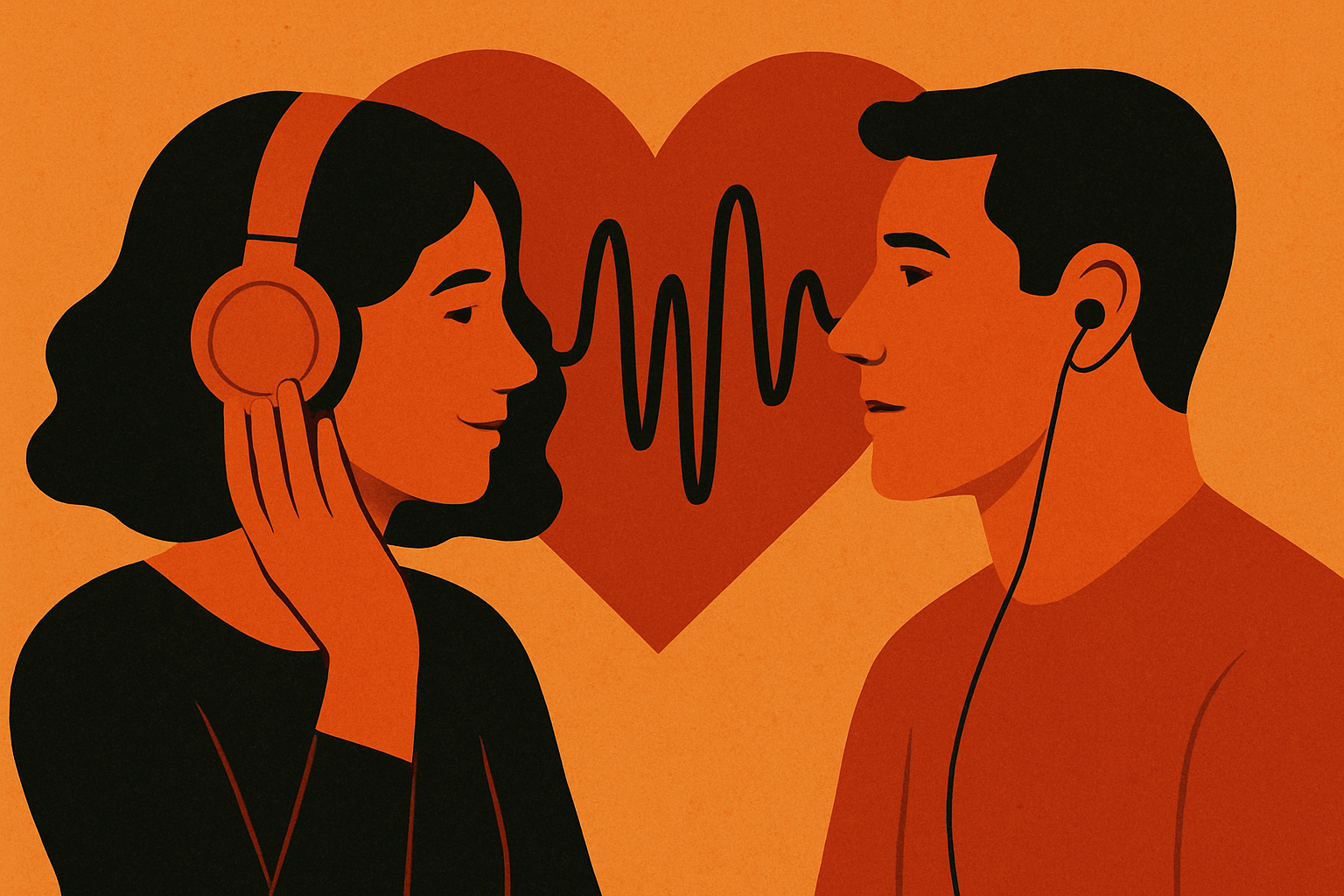
Something quiet has been happening in how people connect online. After years of photos, filters, and carefully curated profiles, a growing number of daters are saying the same thing: they felt like they actually knew someone only after they heard their voice. Not read their messages. Not studied their pictures. Heard them.
This is not nostalgia for phone calls. It is a cultural recalibration — a pushback against the idea that attraction should be assembled from pixels and witty one-liners. Audio is having a moment, and the reasons why say something important about what we are all actually looking for.
The Limits of Text as a Medium for Intimacy
Text is a remarkable tool for conveying information. It is a surprisingly poor tool for conveying a person. When we read a message, we are doing a tremendous amount of interpretive work — filling in tone, intention, and warmth that may or may not be there. We project. We assume. We construct a version of someone from incomplete data, and then we wonder why the in-person meeting feels like meeting a stranger.
Text also invites performance in a way that real-time communication does not. You can draft, revise, delete, and redraft a message until it sounds like the most charming, witty, composed version of yourself. That is not dishonesty exactly, but it is a kind of armor. The result is two people interacting not with each other, but with the most polished representations of each other. Chemistry built on that foundation has nowhere solid to stand.
What the Voice Carries That Text Cannot
Voice is real-time, and real-time is where authenticity lives. When you are speaking, you do not have the luxury of the delete key. Your pace, your pauses, the way your energy rises when you talk about something you love — all of it transmits instantly, without editing. This is precisely why a voice conversation can feel more intimate after twenty minutes than a text exchange that lasted three weeks.
Research in psychoacoustics and social psychology has long confirmed what most of us feel intuitively: a significant portion of emotional communication travels through vocal qualities — warmth, humor, anxiety, sincerity — rather than through words themselves. We read trustworthiness in a voice. We detect genuine laughter versus polite laughter. We notice the half-second hesitation that tells us someone is actually thinking about what we asked, not just producing a socially acceptable answer.
In short, voice gives us signal where text gives us noise.
A Cultural Shift That Was Already Underway
The broader culture has been moving in this direction for a while. The podcast boom was not just about content — it was about the intimacy of a voice in your ear for an hour. Voice notes have quietly become the preferred communication format for millions of people who find long text threads exhausting. Social audio, audio-only features inside larger platforms, and voice-first apps all reflect the same underlying hunger: people want to hear each other, not just read each other.
What is interesting is that audio occupies a specific psychological space that neither text nor video quite fills. Video, for all its richness, introduces appearance — and with appearance comes the re-activation of all the snap judgments that social conditioning has spent years wiring into us. Audio strips that away. You are left with presence, with personality, with how someone actually sounds when they are trying to explain something they care about or laughing at a joke that genuinely landed.
Why Sequence Changes Everything
Understanding why audio feels more honest also requires understanding context — specifically, what comes before it and what comes after. A voice call that happens after weeks of text conversation is a different experience than one that happens after the right foundation has been laid.
On L'Amore Vince, audio is not a standalone feature — it is the second round in a deliberate progression. Matched users begin with a text round, where they have a real conversation without the pressure of appearance. When both feel ready, they move into the audio round, where voice does its honest work. After that comes video, and eventually the option to exchange contact details if they choose. Each round is a gate that both people choose to open together.
The result is that by the time two people are on an audio call, they have already built something worth protecting. They have context for each other. The voice does not have to do all the heavy lifting of establishing connection from scratch — it gets to deepen a connection that already exists. That is a fundamentally different experience than jumping onto a phone call with someone whose face you liked in a photo.
Honesty Without Pressure
One of the underappreciated things about audio-only conversation is what it removes as much as what it adds. Without visual input, both people are freed from a specific kind of self-consciousness — the awareness of being looked at. For many people, this creates a paradoxically more open version of themselves. They talk more freely. They are funnier, stranger, more specific. They say things they might have held back if a camera was on.
This matters enormously in early connection. The biggest barrier to genuine intimacy in dating is not lack of attraction — it is the performance anxiety that prevents people from showing up as themselves before they feel safe. Audio occupies a sweet spot: more present and revealing than text, but less exposed than video. For a lot of people, it is the round where they first feel like they are actually meeting someone.
The Trust Layer Underneath It All
None of this works if you cannot trust that the person you are talking to is real. Audio honesty means nothing if the voice on the other end belongs to someone running a deception. This is a legitimate concern in online dating, and it has shaped the culture around it — often in damaging ways, making people guarded and slow to invest.
LAV's approach to this is a daily liveness check-in — a quick face-verification that every user completes each day they use the app. This builds a visible verified streak attached to each profile, so you can see at a glance not just that someone was verified once, but that they have been consistently showing up as a real, live person. That ongoing accountability changes the emotional calculus of opening up in an audio conversation. It is not a leap of faith into the unknown — it is a step toward someone whose presence has already been established.
Compatibility Before Chemistry — and Then Chemistry
Underlying the entire progression is a compatibility score built from how both users answered their personality questions — not from what they look like. This means that by the time two people are in a voice conversation, they already have something quantifiable in common. They are not hoping for chemistry to appear from nowhere; they are exploring a connection that the app's matching suggested was worth exploring in the first place.
That framing matters psychologically. Knowing that you matched on substance before you matched on surface gives both people a reason to stay curious rather than retreat at the first moment of awkwardness. And audio, being the honest medium it is, will surface some awkwardness — the good kind, the kind that happens between two real people actually trying to connect.
What This All Points Toward
The rise of voice-first connection is not a trend that will pass. It reflects something durable about what human beings need from each other: presence, not just information. We are wired to read intention and warmth in voices that no amount of emoji can replicate. As the dating culture slowly, unevenly, but genuinely begins to reckon with the damage done by appearance-first design, audio is one of the things pointing toward a better direction.
Substance over surface is a phrase that can sound abstract until you actually experience what it feels like to be genuinely moved by a voice — to hear someone's laugh and think, yes, that is a real person, and I want to keep talking to them. That experience is available. The design just has to get out of the way long enough to let it happen.
The biggest barrier to genuine intimacy in dating is not lack of attraction — it is the performance anxiety that prevents people from showing up as themselves before they feel safe. Audio occupies a sweet spot that helps dissolve it.
Pos terkait

Dating in El Paso as a Woman: The City That Walks You Home
By late Sunday afternoon in El Paso the grill smoke stands over whole neighborhoods at once, the Lower Valley, the Northeast, the westside cul-de-sacs, and inside that smoke, at folding tables in backyards, sits the institution that actually governs a woman’s romantic life here: her grandmother.…

Dating in Portland, Maine as a Woman: Small Harbor, Long Memory
On a Saturday night in July, Wharf Street is wall to wall with bachelorette parties, sashes and matching shirts and men down from elsewhere shouting compliments that nobody requested, and a Portland woman threading through it is usually on her way somewhere else. Come back to the same cobblestones…

Dating in Provo as a Woman: The Ward Calendar and the Dirty Soda
At nine on a weeknight the drive-through line at a Provo soda shop runs ten cars deep, and a fair share of those cars are dates. The dirty soda, a fountain drink dressed with cream and syrup and lime, is Utah County’s answer to the cocktail, invented for a population that does not drink alcohol or…
Comments
Bergabunglah untuk berkomentarJadilah orang pertama yang berkomentar.