Mail-Order Bride Myths vs. Reality: International Dating in 2026
L'Amore Vince: The Best Dating App For Single Women
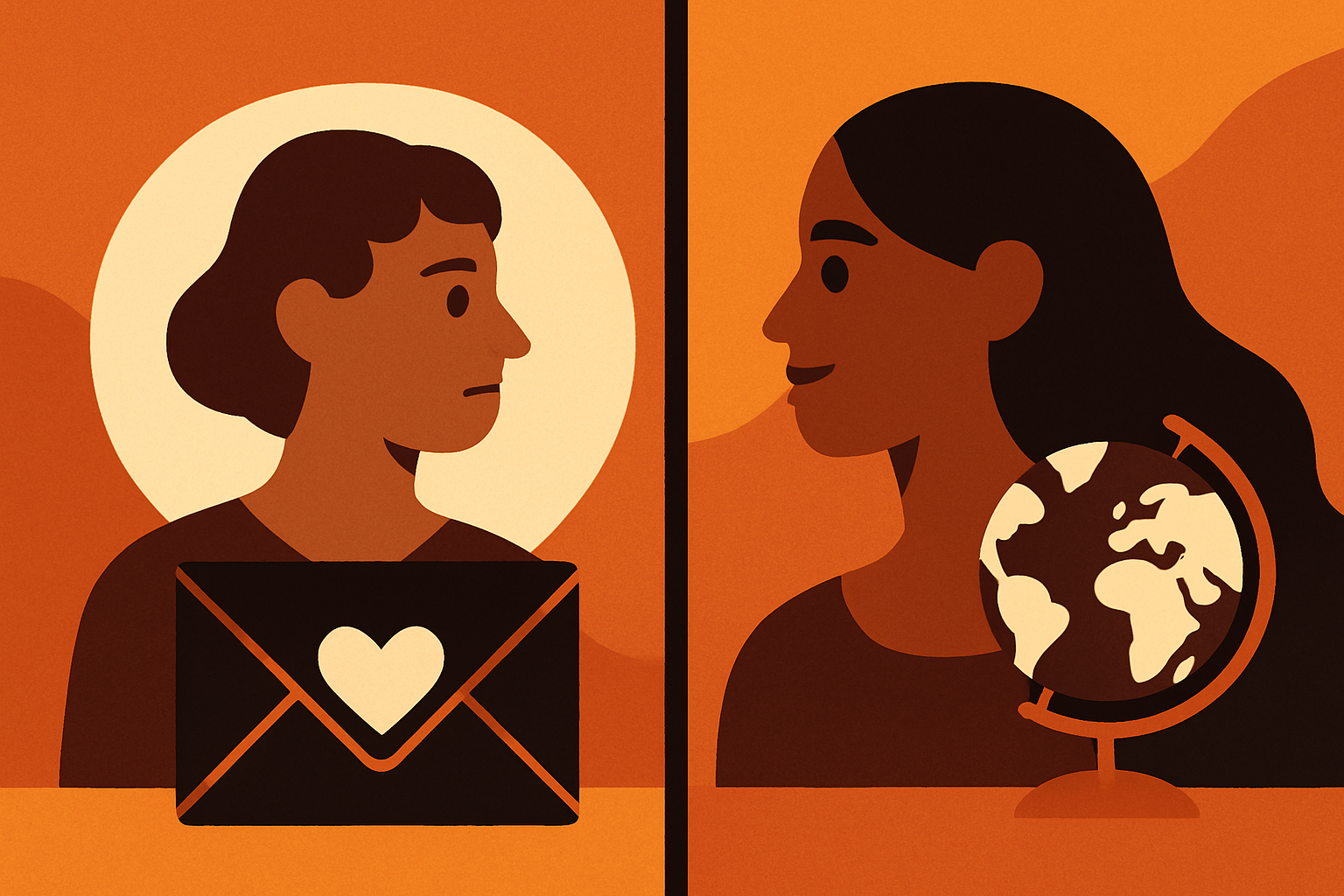
The term 'mail-order bride' entered American newspapers around 1850, when settlers pushing into the Great Plains, the flat prairie region of the central United States, placed classified ads describing themselves and asking for wives willing to relocate to a place they had never seen. Those ads ran for a fee, got answered by letter, and sometimes ended in a wedding within weeks of the first reply arriving by post. The phrase stuck for a century and a half, long after the practice it described had changed almost beyond recognition.
By the 1970s and 80s, the same basic idea had turned into a mail order catalog business in the most literal sense: agencies printed physical booklets with photographs and brief biographies of women, mostly from the Philippines, and later Russia and Ukraine, and mailed them to paying male subscribers in wealthier countries. Men circled names, wrote letters, and eventually flew out to meet a shortlist. That catalog model, one-directional, priced, and built around a single photograph doing all the talking, is the image most people still picture when they hear the phrase. It also hasn't existed in that form for a very long time.
The Law Changed the Model in 2006
The International Marriage Broker Regulation Act, a U.S. federal law usually shortened to IMBRA, effectively ended the catalog business as it had operated for decades. Passed in 2006 after a string of documented abuse cases involving marriage brokers, IMBRA requires any commercial matchmaking service connecting U.S. citizens with people abroad for marriage purposes to run a criminal background check on the U.S. client and disclose the results to the foreign national before any contact information is shared. It also bars agencies from publishing personal contact details or photographs of the women without their written consent for each specific inquiry, which quietly dismantled the entire premise of an unsolicited catalog. The law didn't end international matchmaking. It just made the version people picture from the 1990s illegal to run.
Who Is Actually Meeting Across Borders in 2026
Most international relationships that start online today begin the same way domestic ones do: on an app or platform where both people build a profile, both people browse, and both people decide whether to respond. Nobody is circling a name in a mailed booklet. The interest has to be mutual before a conversation even opens, and video calls, not plane tickets, are usually how people first see and hear each other speak. Age gaps and income gaps that were common in the catalog era still show up in some pairings, but the mechanism connecting two people, mutual opt-in on a shared platform, looks nothing like a one-way purchase.
The Real Risk in 2026 Isn't the One the Myth Warns About
The persistent myth centers on coercion: a woman with no agency, sold to a stranger. The far more common risk in actual 2026 data runs the opposite direction. The FTC's consumer fraud reporting shows romance scams costing Americans hundreds of millions of dollars a year, and the typical scam doesn't involve a real overseas match at all. It involves a fabricated profile, often stolen photos of someone who has no idea their face is being used, run by a scammer who spends weeks building emotional trust before asking for money to cover a medical bill, a plane ticket, or a customs fee that never gets used because the person doesn't exist. The danger isn't that international dating is exploitative by design. It's that a long-distance, text-heavy courtship is easy to fake convincingly for a long time before anyone gets caught.
What Daily Verification Actually Solves
This is the gap that verification features are built to close, and it's worth being specific about what they do and don't do. A liveness check, a short face scan taken in real time rather than an uploaded photo, confirms that the person behind a profile today is a real, present human being and not a static image recycled across a dozen fake accounts. Repeating that check daily and displaying the result as a visible streak turns a one-time signal into an ongoing one: a profile with a ninety-day verified streak has been checked ninety separate times, not once at signup. For a courtship that might run for months before either person can afford to fly out and meet in person, that ongoing signal matters more than almost anything else on the profile.
Substance-First Isn't New, It's a Return
There's a strange symmetry in all of this. The original mid-1800s prairie ads worked on substance because the format demanded it: a paragraph of text, no photo, weeks of letters before anyone met in person. What existed in between, the fifty years of catalog-and-photo matchmaking that gave the phrase its bad reputation, was actually the anomaly: a period when a single image was allowed to stand in for a person before any real exchange happened. Apps that push conversation before video, and video before contact information, aren't inventing something new so much as rebuilding the part of the original model that worked, minus the parts that clearly didn't.
L'Amore Vince applies that same logic to its own matches: a daily face-verification check-in builds a visible streak on every profile, so the person you've been writing to for six weeks is demonstrably still the same real, consistently verified individual, not a photo borrowed from someone who's never heard of the conversation happening in their name.
Схожі публікації
Dating in Des Moines as a Woman: The Timeline Everyone Can See
By nine on a Saturday morning in summer the strollers own Court Avenue. The farmers market crowd moves at stroller pace, wedding rings catch the sun on every third hand reaching for tomatoes, and a single woman walking it alone can read her whole demographic situation in four blocks. Des Moines is…
Dating in Lexington as a Woman: Horse Girls and the Spring Meet
The hat is chosen weeks out. A Lexington woman with clubhouse plans for the spring meet does not improvise the hat, because Keeneland in April is the one occasion on the local calendar where a woman dresses to be looked at by the entire city at once and the city, in return, agrees to look with its…
Dating in Asheville as a Woman: The Odds and the Fresh Start
There is a conversation that happens on porches all over West Asheville, between a woman who just moved to town and a woman who has been here a few years, and it follows a script so fixed the participants could swap parts. The newcomer says the town is beautiful and the people are open and she…
Comments
Приєднатися, щоб коментуватиБудьте першим, хто прокоментує.