比較

One-Time Selfie vs. Daily Liveness: How Dating Apps Verify You

L'Amore Vince: Text first. Voice next. Face last.
One-Time Selfie vs. Daily Liveness: How Dating Apps Verify You
🔊 朗讀

Fake profiles, bots, and catfishes are not edge cases on dating apps — they are a persistent, structural problem. The question is not whether your app has a verification system. The question is whether that system keeps working after the first five minutes.

How Most Apps Handle Identity Verification

The most common approach across mainstream dating apps is a one-time photo verification: you snap a selfie at sign-up, an automated system compares it to your profile picture, and you receive a badge. Done. From that point forward, the app largely trusts you indefinitely.

On the surface, this sounds reassuring. In practice, the single-check model has a straightforward flaw: it only confirms that one real person existed at one moment in time. It says nothing about who is actually using the account a week, a month, or a year later.

The Verified Badge That Stops Being True

Consider the most common breach scenarios that a one-time check cannot catch:

  • A scammer buys or steals a verified account from a real person and continues using it with the original badge intact.

  • Someone passes the selfie check honestly but later outsources their account to a friend, a hired profile writer, or a romance-scam operation.

  • A bot farm completes the one-time check using a paid real human, then hands the account back to automation.

In each case, the verified badge remains on the profile — because the system never checks again. The badge becomes a historical artifact, not a current guarantee.

What a Daily Liveness Check-In Actually Does

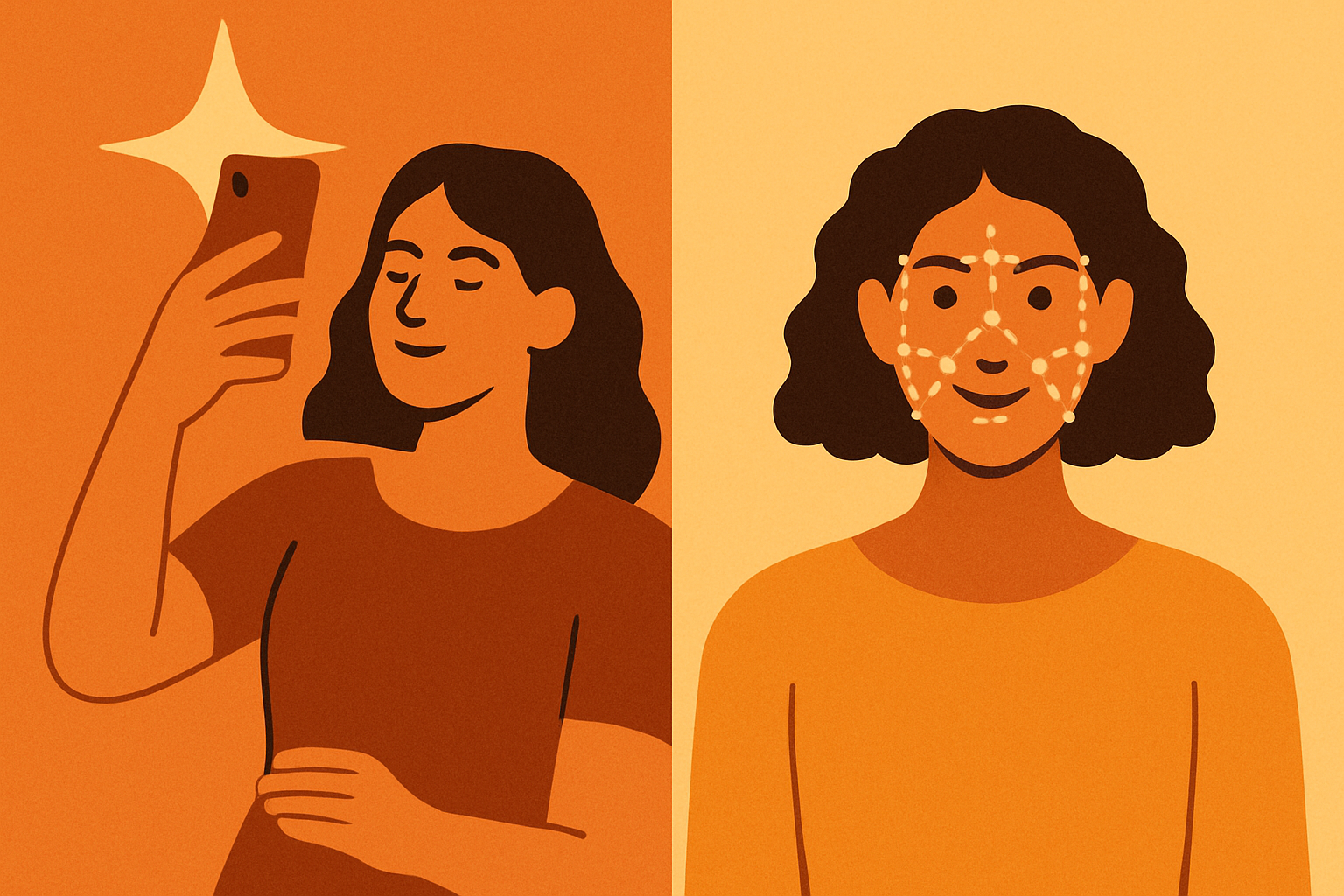
L'Amore Vince takes a different architectural stance. Instead of a single gate at registration, every active user completes a quick daily liveness check-in — a real-time face verification that confirms a live human being is present and matches the account. It takes seconds. It happens every day.

3
Hold still…
Day 7 of your streak
verified daily · 🇩🇪 🇰🇷 🇲🇽 and 19 more locales
A quick daily liveness check — proof everyone here is a real, present person.

The key word is "liveness." A liveness check is not just comparing a static image. It confirms that a real, live person — not a photo, not a deepfake, not a replay of old footage — is completing the action right now. This closes the loopholes that defeat snapshot-based verification.

The Verified Streak: Verification You Can See

Each completed daily check-in builds a visible verified streak on the user's profile. The streak is not a static badge frozen at sign-up — it is a live counter that tells you exactly how many consecutive days this person has confirmed they are real. A streak of 30 days is a fundamentally different signal than a one-time checkmark earned months ago.

22day streak
✓ Verified
Top streaks worldwide 🇮🇹 🇵🇭 🇿🇦
Every green dot is a verified day. Miss one and the streak resets.

This matters for you as the person on the other side of a conversation. When you are in R1 text chat getting to know someone before a single photo has been exchanged, the streak is one of the most concrete pieces of information available to you. It answers a question that no profile photo can: is this a consistently active, consistently verified real human being?

A streak of 30 days means someone has shown up and proved they are real, every single day, for a month. That is accountability a one-time selfie check structurally cannot provide.

Why This Matters More in a Progressive-Reveal App

On a photo-first swiping app, you see a face before you invest any time. Emotional risk is low early on. But LAV is deliberately built the other way around. You get to know someone through text, then voice, then video — and you make real emotional investments in those rounds before you ever see them clearly.

That is a feature, not a vulnerability — but only if verification is genuinely robust. The entire value of substance-over-surface matching depends on knowing the substance is coming from a real, consistent person. Daily liveness verification is what makes that promise structurally sound, not just aspirationally true.

How Verification Ties Into the Round Structure

LAV matches users using a compatibility score derived from personality question answers — not appearance. You progress from R1 text to R2 voice to R3 video to R4 contact exchange at a pace both sides agree to, with either person able to pass at any stage. Consent is built into every step of the progression.

1
R1 · Text
Free
2
R2 · Audio
Free
3
R3 · Video
1 cr
4
R4 · Connect
2 cr
🤝
Matching across 🇫🇷 🇯🇵 🇧🇷 🇳🇬 🇪🇸 — 22 languages
The four rounds — you advance only when both of you choose to.

Daily verification threads through all of it. Before you advance to the voice round and hear someone's actual voice for the first time, their streak is visible. Before you move to video and see their face, their streak is visible. By the time you reach R4 and consider sharing contact details — protected, if you choose, by a masked forwarding number — you have days or weeks of consecutive verified check-ins behind the person you are talking to.

A Direct Comparison: One-Time Selfie vs. Daily Liveness

To make this concrete, here is how the two approaches compare across the dimensions that actually affect your safety and experience:

  • Freshness: A one-time check confirms identity at one past moment. Daily liveness confirms identity today.

  • Account takeover resistance: A stolen verified account keeps its badge forever under a one-time model. Under daily liveness, the new operator would fail the very next check-in.

  • Bot durability: A bot that passes one selfie check runs indefinitely. A bot cannot pass a daily liveness check — it requires a live human face each time.

  • Transparency to other users: A static badge tells you nothing about recency. A visible streak tells you exactly how many consecutive days this person has been verified.

  • Accountability over time: One-time verification creates no ongoing accountability. Daily check-ins create a continuous, visible record of consistent real presence.

The Honest Trade-Off

It is worth being straightforward: daily check-ins require a small daily habit. Not every user will love that. If you want a completely frictionless experience where you set up a profile once and never engage with the platform's safety infrastructure again, LAV's model asks more of you than a one-time selfie check does.

But that friction is the point. It is precisely what makes the verified streak meaningful. An identity guarantee that costs nothing ongoing provides nothing ongoing. The small daily effort is what separates a living signal from a stale badge.

Verification as a Philosophy, Not a Feature

LAV was built on the premise that safety and consent are not add-ons — they are the foundation. The progressive round structure, the compatibility-first matching, the masked number at contact exchange, and the daily liveness check-in are all expressions of the same idea: you should be able to invest in getting to know someone without having to wonder whether that someone is real.

One-time selfie verification was a meaningful step forward when it was introduced across the industry. Daily liveness verification is the next step — because genuine trust is not something you establish once and forget. It is something you maintain, day by day, in the same way that any real relationship requires consistent, continued presence.

分享X / TwitterLinkedIn

Comments

加入評論

搶先發表評論。