Dating as a Woman in Hangzhou: Tea Houses, Tech Bros, and Real Talk
L'Amore Vince: The Best Dating App For Single Working Professionals In Hangzhou China
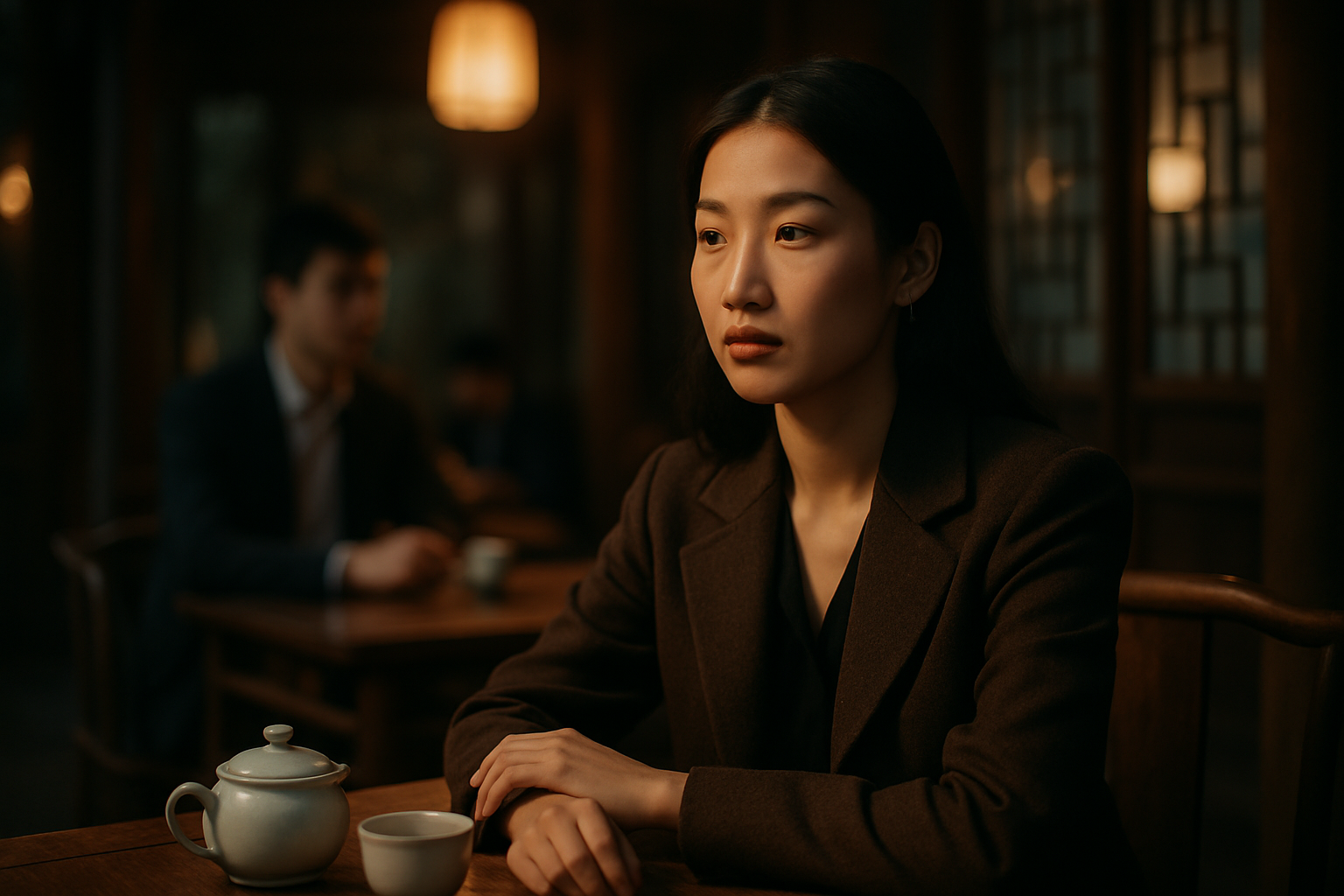
Hangzhou Has Its Own Rules
Hangzhou is not Shanghai. It is not Beijing. It sits in a category entirely its own — a city of roughly twelve million people that somehow still feels like a place where people genuinely slow down, where the lakeside matters, where a Sunday afternoon at West Lake (Xīhú) carries a cultural weight that no other Chinese city can replicate. And all of that shapes romance here in ways that women who date here will recognize immediately, even if they have never articulated it out loud.
Hangzhou is also the home of Alibaba, the beating heart of China's tech economy. That combination — classical beauty and hyper-modern ambition — creates a dating landscape that is genuinely contradictory. The man sitting across from you at a tea house on Longjing Road might work fourteen-hour shifts at a unicorn startup in the Binjiang District tech corridor and still quote a Song Dynasty poem about West Lake without any self-consciousness. That duality is very Hangzhou. Navigating it as a woman is its own education.
The West Lake Effect and What It Actually Means for Dating
West Lake is not just a backdrop — it is a cultural reference point that actively shapes dating behavior. The Broken Bridge (Duàn Qiáo) is the site of the ancient legend of Bai Suzhen and Xu Xian, arguably the most famous love story in Chinese classical literature. Generations of Hangzhou residents have grown up with that story as the local mythology of romance. This matters because Hangzhou dates, especially early ones, are disproportionately likely to happen around the lake. Strolling the Su Causeway, sitting at a tea house near Quyuan Garden, wandering the night markets at Hefang Street — these are the socially understood venues for "seeing if there is something there."
For women, this creates a specific dynamic: the West Lake date is romantic by default. The setting does emotional labor that the conversation has not yet earned. Women in Hangzhou often describe a sense that men lean on the scenery as a substitute for actual vulnerability. You can walk the Su Causeway with someone for two hours and feel like you connected, then realize you know almost nothing about them. The lake is beautiful. It is also a very convenient distraction from depth.
The Binjiang Bubble: Dating the Tech Workforce
Binjiang District is effectively a city within the city — glass towers, company cafeterias, gym complexes, and apartment complexes designed to keep tech workers contained. The 996 culture (9am to 9pm, six days a week) that Alibaba helped normalize means that a significant portion of the men women in Hangzhou encounter are, functionally, unavailable during the week. Dating timelines compress into weekends. First, second, and third dates can happen within a single Saturday. This is not superficiality — it is the natural adaptation to a schedule that has almost no slack.
Women who work in tech themselves, particularly those in the Qianjiang New City financial district or the Yuhang District campuses of major internet firms, often describe a strange invisibility. They are surrounded by potential partners in the abstract but genuinely isolated in practice. After-work socializing is either company-organized (which carries its own power dynamics) or it does not happen. The irony of working in one of the world's most connected cities and feeling profoundly hard to meet is something Hangzhou tech women mention constantly.
Family Pressure Has a Hangzhou Accent
The shèngnǚ (剩女) narrative — the socially loaded term for unmarried women over a certain age — exists everywhere in China, but Hangzhou adds its own texture. This is a city with deep Jiangnan roots, where family structures tend to be tightly knit and the concept of "face" (miànzi) operates at a particularly granular neighborhood level. In older residential areas like Shangtang Road or the Gongchen Bridge quarter, neighbors genuinely talk. A woman in her late twenties who is not in a visible relationship will feel that observation from her parents' community in ways that feel qualitatively different from the relative anonymity of Shanghai.
"My mother's friends see me at the wet market on Sunday and ask about my boyfriend. They have been asking for three years. The market is two blocks from my apartment. There is no escaping the question." — a 31-year-old product manager living near Wulin Square
The pressure is real, and it distorts dating behavior in specific ways. It can push women toward signaling seriousness too early, toward tolerating incompatibility longer than they should, toward accepting the performance of a relationship (the nice West Lake walk, the gift of Longjing tea) over the actual substance of one.
What Women in Hangzhou Are Actually Dealing With on Dating Apps
Photo-first swiping in Hangzhou carries the same problems it does everywhere, but with some local inflections worth naming:
Profile photos are heavily filtered. The beauty standard in Hangzhou — as in much of Jiangnan — skews toward a specific aesthetic: pale skin, delicate features, soft styling. Women who do not match it describe feeling algorithmically invisible even before any human decision is made.
There is a particular pattern of men who mention their company (and implicitly their salary tier at Alibaba, NetEase, or a Series B startup) within the first few messages as a credentialing move. It is the Hangzhou version of leading with your job title, but it carries specific weight here because the tech hierarchy is understood by almost everyone.
Ghost behavior after an in-person meeting is common and, women report, often happens without explanation — partly a cultural discomfort with direct rejection, partly the volume effect of apps that make replacement feel easy.
Verification is a genuine anxiety. Catfishing and romance scam operations exist in every Chinese city, but Hangzhou's relatively affluent, educated female demographic — women with disposable income and a degree of financial independence — makes them a specific target. Women describe doing their own due diligence (reverse image searching photos, checking WeChat Moments timelines for consistency) in ways that speak to a baseline distrust baked into the current experience.
The Deeper Tension: New Expectations in an Old City
Hangzhou women, particularly those who studied outside the city or have worked internationally, often describe a gap between what they want from a relationship and what the local dating culture is structured to deliver. They want intellectual parity. They want men who are not threatened by their salaries. They want the conversation to matter as much as the setting. They are not anti-romance — they are pro-substance. The West Lake is beautiful; they just also want to know who they are sitting beside it with.
There is also a generational negotiation happening in real time around the concept of nèijuǎn (involution) — the exhausting competitive spiral that Hangzhou's tech economy embodies. Some women are explicitly opting out of partnering with someone whose entire identity is their work output. Others feel that shared ambition is the only basis for mutual respect. The city has not resolved this tension. It is living inside it.
What Would Actually Help
What the women we have talked to in Hangzhou consistently describe wanting is not complicated: they want to know who someone is before they have to decide whether to meet them. They want verification they can trust. They want the conversation to come first — before a face, before a flex about which campus they work on, before the careful curation of a profile photo taken at golden hour by the Su Causeway.
That sequence — personality and conversation first, then voice, then video, with a verified real person on the other end every time — is the specific logic that L'Amore Vince is built around. The compatibility score comes from how you answer questions about who you actually are, not from how your face photographs in the Liuhe Pagoda light. The daily liveness check-in builds a verified streak that tells you the person you are talking to has shown up as a real human being, every day, consistently. And if things progress to the point of exchanging contact details, a masked forwarding number means you never have to hand a stranger in a city of twelve million people your actual phone number before you are ready.
The lake is still beautiful. The tea from the hills above Longjing village is still extraordinary. A real conversation, with a verified real person, about what you actually value — that is just a better place to start.
相關文章

Dating in El Paso as a Woman: The City That Walks You Home
By late Sunday afternoon in El Paso the grill smoke stands over whole neighborhoods at once, the Lower Valley, the Northeast, the westside cul-de-sacs, and inside that smoke, at folding tables in backyards, sits the institution that actually governs a woman’s romantic life here: her grandmother.…

Dating in Portland, Maine as a Woman: Small Harbor, Long Memory
On a Saturday night in July, Wharf Street is wall to wall with bachelorette parties, sashes and matching shirts and men down from elsewhere shouting compliments that nobody requested, and a Portland woman threading through it is usually on her way somewhere else. Come back to the same cobblestones…

Dating in Provo as a Woman: The Ward Calendar and the Dirty Soda
At nine on a weeknight the drive-through line at a Provo soda shop runs ten cars deep, and a fair share of those cars are dates. The dirty soda, a fountain drink dressed with cream and syrup and lime, is Utah County’s answer to the cocktail, invented for a population that does not drink alcohol or…
Comments
加入評論搶先發表評論。