Dating in Santo Domingo as a Woman: The Salón and the Street
L'Amore Vince: The Best Dating App For Single Women In Santo Domingo
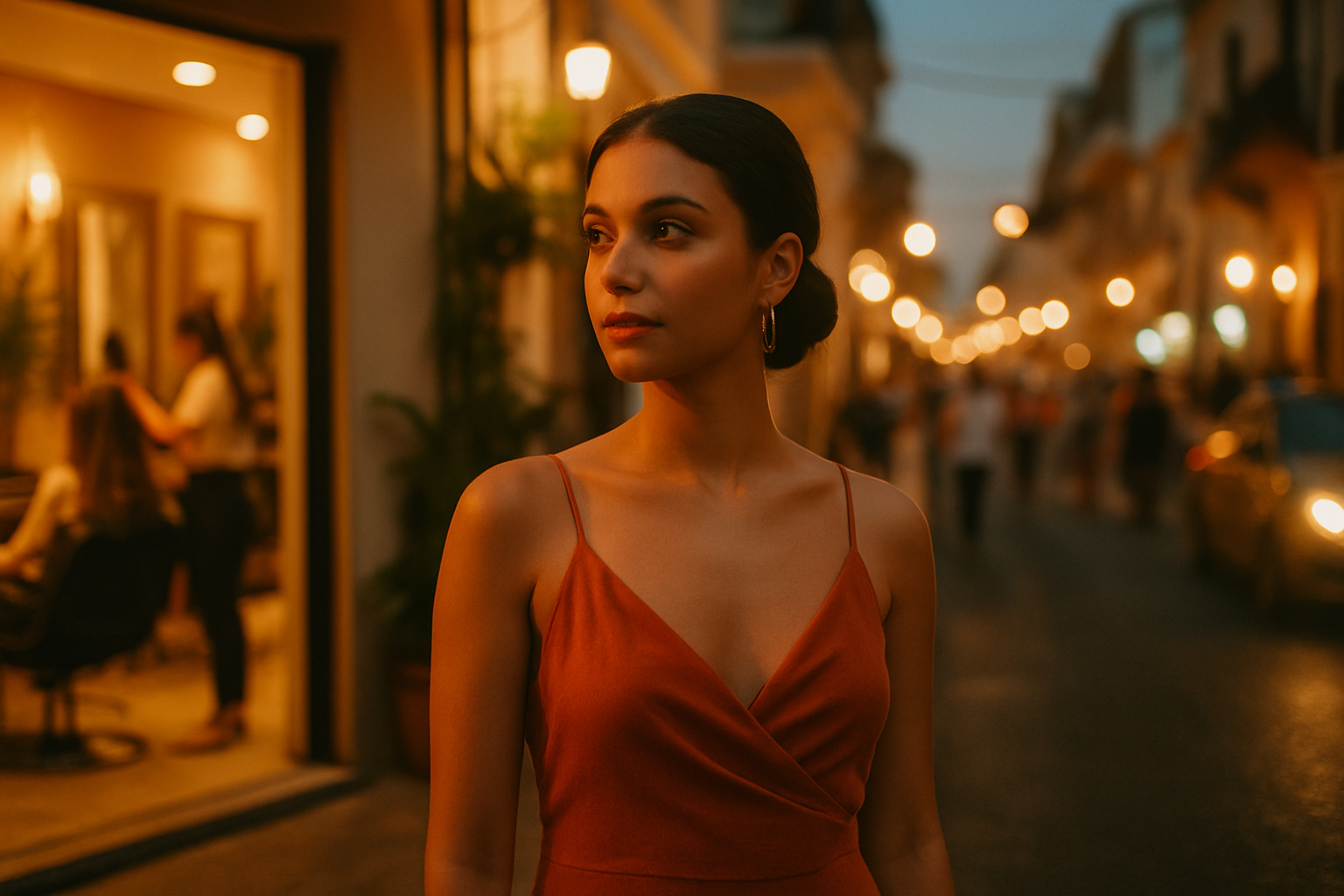
A woman crossing Parque Colón at six in the evening collects commentary the way the benches collect pigeons. The piropo, the street compliment delivered to a passing stranger, is a working institution in Santo Domingo, and it arrives on a spectrum that runs from an old man’s courtly murmur of que Dios la bendiga to material no one’s grandmother would defend. The local response is a technology in itself: eyes forward, pace unchanged, expression set to a neutrality that acknowledges nothing. Dominican women learn it in adolescence and execute it without visible effort. Visitors tend to get it wrong in one of two directions, smiling, which is read as an opening, or flinching, which is read as an event. The city’s younger women argue about the piropo with their mothers, who received the same lines on the same corners and are divided about what, if anything, has been lost. What nobody argues about is who does the walking and who does the commenting.
The salón on Friday
The institution that belongs entirely to women is the salón. The Dominican beauty salon is a weekly discipline rather than an occasional treat, and on Fridays the neighbourhood salón fills with women under rollers and dryers preparing for the weekend, an appointment kept with roughly the seriousness other cultures reserve for church. The salón is also the barrio’s parliament of record. Engagements, separations, a suitor’s employment history and the character of his mother are all reviewed there, and a woman considering a man can have him researched through the chair network faster than any background check could manage. The aesthetic standard the salón maintains is high and is the default: hair done, nails done, dressed with intention, because in Santo Domingo presentation is read as self-respect rather than vanity. The counterweight is generational. The pajón, the natural curl worn unstraightened, has moved over the last decade from schoolyard insult to a point of pride for many younger women, and the argument between the blowout and the curl is a genuine cultural argument, conducted, naturally, in the salón.
The colmado after ten
The colmado, the corner store that becomes the neighbourhood bar after dark, is the city’s social engine, and its night-time seating chart is worth reading honestly. The plastic chairs on the pavement at midnight skew male. Women are present, in couples and in mixed juntas, the fixed crews of friends that move through the city together, but a woman drinking alone at the colmado at that hour is a rarity and will be treated as one. Daytime is another country. The colmado at four in the afternoon belongs to everyone, and the woman sending a child for bread or stopping for a cold Presidente is its most ordinary citizen. Drinking itself carries little stigma here. Dominican women drink beer and rum at parties and on dance floors without anyone keeping score, and the operative rule is not abstinence but company. The question a dominicana’s friends will ask the next day is not how much she drank. It is who she was with, and who saw.
The doña, consulted
A large share of Santo Domingo’s households are run by women, and the courtship consequences are structural. The doña, the senior woman of a household, is a figure of real authority, and a man courting seriously will be presented to her, assessed by her, and discussed afterwards by a committee he never sees. Mothers and grandmothers are consulted early and often. Aunts function as an intelligence service, and a suitor with a bad history in one barrio will find that it has travelled to the next one ahead of him. Single motherhood, inside this arrangement, is ordinary. Consensual unions are as common as formal marriages in much of the city, households are frequently organised around the mother’s line, and the divorced woman or the mother raising children with her own mother’s help is unremarkable in most barrios, though the professional classes keep somewhat more formal expectations. The stigma a visitor might expect mostly fails to apply. What applies instead is the doña’s standing question about any new man, which is practical rather than moral: what exactly does he bring.
The first move, danced
Approaching is men’s work, and the men do it early, often and with a confidence that does not depend on encouragement. The figure the culture has a name for is the tíguere, the streetwise charmer who talks beautifully and means a negotiable fraction of it, and Dominican women rate new men against that archetype with the accuracy of long practice. A woman who approaches a man directly has done something the room will notice. It happens, and it lands as a strong declaration rather than a casual one. The sanctioned channel for a woman’s initiative is the dance floor. Merengue and bachata are couple dances, accepting a dance is an ordinary courtesy that commits her to nothing, and how she dances it, at what distance, for how many songs, is a vocabulary every dominicano reads fluently. Payment is not negotiated. The man pays, a woman reaching for the bill will be understood as either foreign or delivering a verdict, and both readings are usually correct.
Local women, visiting women
The capital treats a visiting woman differently from a local one, and the difference is instructive. A foreign woman draws the same piropos plus an assumption of wealth and latitude, attention that is flattering on Monday and tiring by Thursday, and the professionalised charm aimed at tourists is mostly a beach-town phenomenon, Boca Chica and points east, rather than a Zona Colonial one. Local women read the attention paid to visitors with mild irony and no particular resentment; they know precisely what it costs to be courted this fluently. The dominicana’s own latitude is wider than the postcard version of the Caribbean suggests and narrower than her brother’s, and she manages the gap with the tools the city gives her: the junta that closes ranks, the salón’s intelligence file, the doña’s veto, and a personal firmness that visitors regularly mistake for coldness until the moment they need it themselves.
Getting home
The practical habits are unromantic and near universal. At night women move door to door by app taxi rather than flagging a motoconcho, the motorcycle taxi that is everyday transport by daylight and a stranger’s back seat at two in the morning, and the group chat is told who she is with and when she is expected back. The Malecón after dark is for company. The Zona Colonial is lit and patrolled and treated accordingly, and the deeper barrios are navigated the way locals navigate them, with somebody. None of this is siege behaviour and nobody performs it as such; it is logistics, run with the same fluency as the hair appointment, and it leaves room for a city that is loud, affectionate and genuinely warm to women who hold their line. The evening is engineered so that the warmth is the part she experiences.
Words first, as the doña always insisted
What the salón and the doña have built between them is a vetting system that runs on words: who he is, who his people are, what he has actually said and done, all established well before anything else is offered. An app that runs the same order suits this city, from the woman’s chair, far better than the photo grid ever has, and that is the design of L’Amore Vince, where conversation comes first, in text and then voice and then video, so the man is established before the face is. Santo Domingo has been researching suitors under the dryers for generations. It would recognise the method immediately, and then ask, as the doña always asks, one further practical question.
相关文章

Dating in El Paso as a Woman: The City That Walks You Home
By late Sunday afternoon in El Paso the grill smoke stands over whole neighborhoods at once, the Lower Valley, the Northeast, the westside cul-de-sacs, and inside that smoke, at folding tables in backyards, sits the institution that actually governs a woman’s romantic life here: her grandmother.…

Dating in Portland, Maine as a Woman: Small Harbor, Long Memory
On a Saturday night in July, Wharf Street is wall to wall with bachelorette parties, sashes and matching shirts and men down from elsewhere shouting compliments that nobody requested, and a Portland woman threading through it is usually on her way somewhere else. Come back to the same cobblestones…

Dating in Provo as a Woman: The Ward Calendar and the Dirty Soda
At nine on a weeknight the drive-through line at a Provo soda shop runs ten cars deep, and a fair share of those cars are dates. The dirty soda, a fountain drink dressed with cream and syrup and lime, is Utah County’s answer to the cocktail, invented for a population that does not drink alcohol or…
Comments
加入评论抢先发表评论。