AI-Generated Profile Photos: How to Spot a Deepfake on a Dating App
L'Amore Vince: The Best Dating App For Single Women
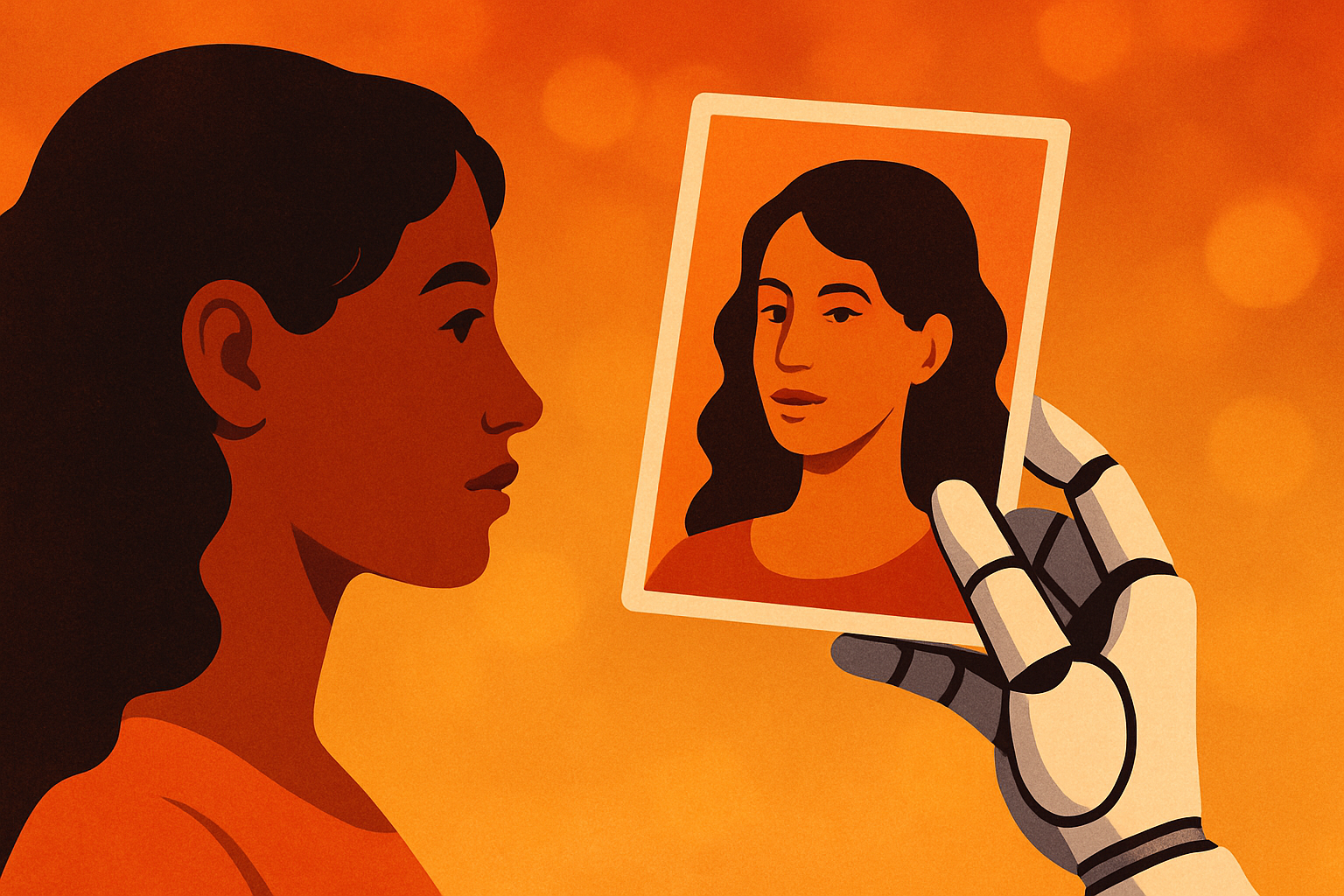
On thispersondoesnotexist.com, a website built years ago to demonstrate a particular kind of artificial intelligence, every reload of the page produces a brand-new photograph of a human being who has never existed and never will. Two eyes, a nose, a mouth, skin texture, a plausible haircut, sometimes a collared shirt or a pair of earrings, generated in under two seconds and gone the moment you refresh again. The technology behind it is a GAN, short for generative adversarial network, which is really two computer programs locked in competition until one of them gets convincing enough to fool a human eye. That same technology, once a curiosity for researchers, now shows up in dating app profiles at a scale nobody tracks precisely, and the number of matches built entirely on a face nobody ever photographed keeps climbing.
What the Fake Faces Are For
A stolen photo of a real person carries risk. That person can find it, report it, or show up in a reverse image search, a method of searching the internet by uploading a picture instead of typing words, which flags where else the photo appears online. An AI-generated face carries none of that risk, because it has no other appearances to be flagged. It was never posted anywhere before, it belongs to no LinkedIn profile or wedding album, and it cannot be traced back to an angry ex or a confused stranger. That makes synthetic faces the preferred tool for romance scams and for run-of-the-mill catfishing, the practice of posing as someone else to lure a match. The photo looks warm, approachable, symmetrical in the way marketing headshots are symmetrical, and it was chosen precisely because nothing about it can be checked against reality.
Where the Illusion Still Breaks Down
Generators are good at faces and bad at almost everything around them. Ears are a reliable weak point: they are often asymmetrical in ways real ears rarely are, or one ear has an earring and the other does not, or a stud earring seems to float slightly off the earlobe. Teeth tend to look airbrushed, uniformly white and evenly spaced in a way orthodontia rarely achieves. Backgrounds are worse. Any text in the frame, a street sign, a book spine, a coffee cup logo, tends to dissolve into gibberish letters if you zoom in, because the model never learned to render language, only shapes that resemble it. Hands remain the classic tell: too many fingers, too few, or a thumb that bends at an angle no joint allows. Glasses can betray a fake too, since the reflection in the lens often shows a room that does not match the one the person claims to be sitting in.
The Reverse Search Habit, and Its New Limits
For years the standard advice was simple: if a match's photo does not turn up anywhere else on the internet, be suspicious. That advice is weakening. A genuine, private person who rarely posts online can also have a photo with no search history, so absence of results no longer separates a shy real person from a fabricated one. Meanwhile, the photos scammers use are frequently run through small edits, a crop, a filter, a slight recolor, between the moment they are generated and the moment they are posted, specifically to defeat exact-match search tools. Reverse image search is still worth doing. It just is not the single test it used to be, and treating it as proof of anything, in either direction, will get you fooled eventually.
Video Calls Close the Gap a Photo Can't
A still image only has to be convincing once. A live video call has to be convincing continuously, in real time, while a stranger asks unpredictable questions and watches how a face moves when it laughs or looks away. Deepfake video, footage manipulated in real time to swap one face for another, does exist and does get better every year, but it remains far harder to pull off convincingly than a single generated photo, and it tends to glitch under exactly the conditions a normal conversation creates: quick head turns, changing light, someone reaching up to touch their own face. Apps that move a match through a text round, then a voice round, then a video round before any contact information changes hands are structurally harder to run a synthetic face through, because the fraud has to survive a live, unscripted exchange rather than a single flattering upload.
Why a Daily Check-In Beats a One-Time Photo Scan
Plenty of apps ask new users for a one-time selfie during signup, matched automatically against the profile photos already uploaded. It helps, but it only proves that a real face existed on the day the account was created. It says nothing about who is actually behind the keyboard three weeks later, and a determined bad actor can simply ask someone else to do that one verification for them. A daily liveness check-in, a short face verification performed each day rather than once, closes that gap, because it has to keep succeeding, day after day, for the same account to stay active. When that daily check builds into a visible streak attached to a profile, it turns verification from a one-time gate into an ongoing, checkable habit, which is a much harder thing to fake than a single photo.
L'Amore Vince builds its trust model around exactly this idea: instead of asking for one clean verification photo at signup and calling it done, it asks for a quick daily liveness check-in that builds into a visible verified streak on your profile, so the person messaging you in the very first round has proven, that same day, that they are a real person sitting in front of a camera, not a face a generator invented at two in the morning.
관련 게시물
The K-1 Fiancé Visa in 2026: Real Costs, Timelines, and Proof
Form I-129F, the petition that starts every K-1 fiancé visa case, currently carries a filing fee of 675 dollars, paid to U.S. Citizenship and Immigration Services (USCIS, the federal agency that adjudicates immigration benefits) the moment a citizen files it on behalf of a foreign fiancé. That…
Pig Butchering Scams: The Money Red Flags to Watch For
In 2023, the FBI's Internet Crime Complaint Center reported $652 million in confirmed losses from romance scams in the United States alone, and investigators say a majority of that money moved through a single, highly organized fraud model known as pig butchering, a term borrowed from the livestock…
What Your Verified Streak Says About You on L'Amore Vince
Trust is the invisible currency of any relationship, digital or otherwise. On most dating apps, you have almost no way to know whether the person you're talking to is who they claim to be — at least not until you've already invested real emotional energy. L'Amore Vince approaches this problem…
Comments
댓글을 남기려면 참여하세요첫 번째 댓글을 남겨주세요.