Dating as a Woman in the US: Reading the American Romance Map
L'Amore Vince: The Best Dating App For Single Working Professionals In US
A Country of a Thousand Dating Cultures
Dating in the United States is not one experience — it is fifty states of competing expectations, regional rituals, and contradictions that can leave even American-born women wondering what the rules actually are. The US is arguably the birthplace of modern dating as a cultural institution: the word itself, the "talking stage," the "situationship," the agonizing post-date text analysis — these are distinctly American exports. Understanding the landscape means accepting that your ZIP code shapes your romantic life almost as much as your personality does.
The Paradox of Abundance
American women navigate dating inside what researchers call a paradox of choice. The US has the world's most saturated app market — more platforms, more profiles, more options — and yet studies consistently show that American women report higher levels of dating exhaustion and lower satisfaction with the process than women in many comparable countries. The sheer volume of potential matches creates a checkout-counter mentality where people are discarded before a real conversation has landed. For women, this is compounded by the particular way American apps are built: photo-first, swipe-fast, and engineered around initial visual impact in a way that front-loads appearance above everything else.
What Makes American Dating Culture Distinct
The "talking stage" is a uniquely American purgatory — a pre-dating phase with no formal label, no clear obligations, and no agreed-upon timeline, which disproportionately benefits the person who cares less.
Dating multiple people simultaneously is widely accepted and even expected, unlike in many European or Latin American cultures where exclusivity is assumed much earlier. Women who do not know this unspoken norm can misread situations badly.
Safety is a genuine and legitimate concern. American women report higher rates of harassment and unwanted contact from dating apps than women in most peer nations, and the practice of sharing a real phone number early in a match carries risks that women in this country are acutely aware of.
Therapy-speak has entered the dating lexicon in a way unique to the US — "attachment styles," "green flags," "love languages" — which can be a genuine shared vocabulary or a barrier to authentic spontaneity depending on how it is deployed.
The Regional Reality
Regional variation here is real and worth naming. Women dating in New York or Los Angeles face hyper-competitive markets where career identity and ambition are central to attraction scripts. The South retains stronger courtship conventions — slower pacing, more explicit intent-setting early on, and family approval carrying genuine weight. The Midwest has a reputation for directness and relationship-seriousness that women transplanted from coastal cities often find genuinely refreshing. The Mountain West and Pacific Northwest carry their own outdoor-culture social codes. None of these are stereotypes worth over-applying, but they are recognizable enough that women who have moved between regions almost universally describe a recalibration period.
The Verification Gap
"I matched with someone for three weeks before realizing the photos were years old and the voice I expected did not match the person." This is not a rare story. It is a standard American app experience.
American dating culture has normalized a gap between online presentation and real-world reality to a degree that women have largely been asked to simply absorb as a cost of participation. Catfishing, outdated photos, and misleading profiles are treated as background noise rather than a solvable problem. Women carry the risk-management burden of figuring out whether someone is real before investing emotional energy — a genuinely exhausting layer that has no equivalent in, say, meeting someone through a mutual social network.
A Different Starting Point
This is exactly why an approach like L'Amore Vince resonates so specifically with the American experience. L'Amore Vince removes the photo-first pressure entirely, matching on personality compatibility first and progressing through text, voice, and video in deliberate rounds before looks enter the picture at all. Every person you are matched with has completed a daily liveness check-in that builds a visible verified streak — meaning you are never wondering whether the person on the other side is real. When the time comes to exchange contact details, L'Amore Vince offers a masked forwarding number so your real phone number stays private until you choose otherwise. For women dating in the US — where the verification gap is real, where safety concerns are legitimate, and where photo-first apps have delivered more exhaustion than connection — that combination of substance-first matching and built-in verification is not a nice-to-have. It is the foundation that should have been there from the beginning.
संबंधित पोस्ट
Dating in El Paso as a Woman: The City That Walks You Home
By late Sunday afternoon in El Paso the grill smoke stands over whole neighborhoods at once, the Lower Valley, the Northeast, the westside cul-de-sacs, and inside that smoke, at folding tables in backyards, sits the institution that actually governs a woman’s romantic life here: her grandmother.…

Dating in Portland, Maine as a Woman: Small Harbor, Long Memory
On a Saturday night in July, Wharf Street is wall to wall with bachelorette parties, sashes and matching shirts and men down from elsewhere shouting compliments that nobody requested, and a Portland woman threading through it is usually on her way somewhere else. Come back to the same cobblestones…
Dating in Provo as a Woman: The Ward Calendar and the Dirty Soda
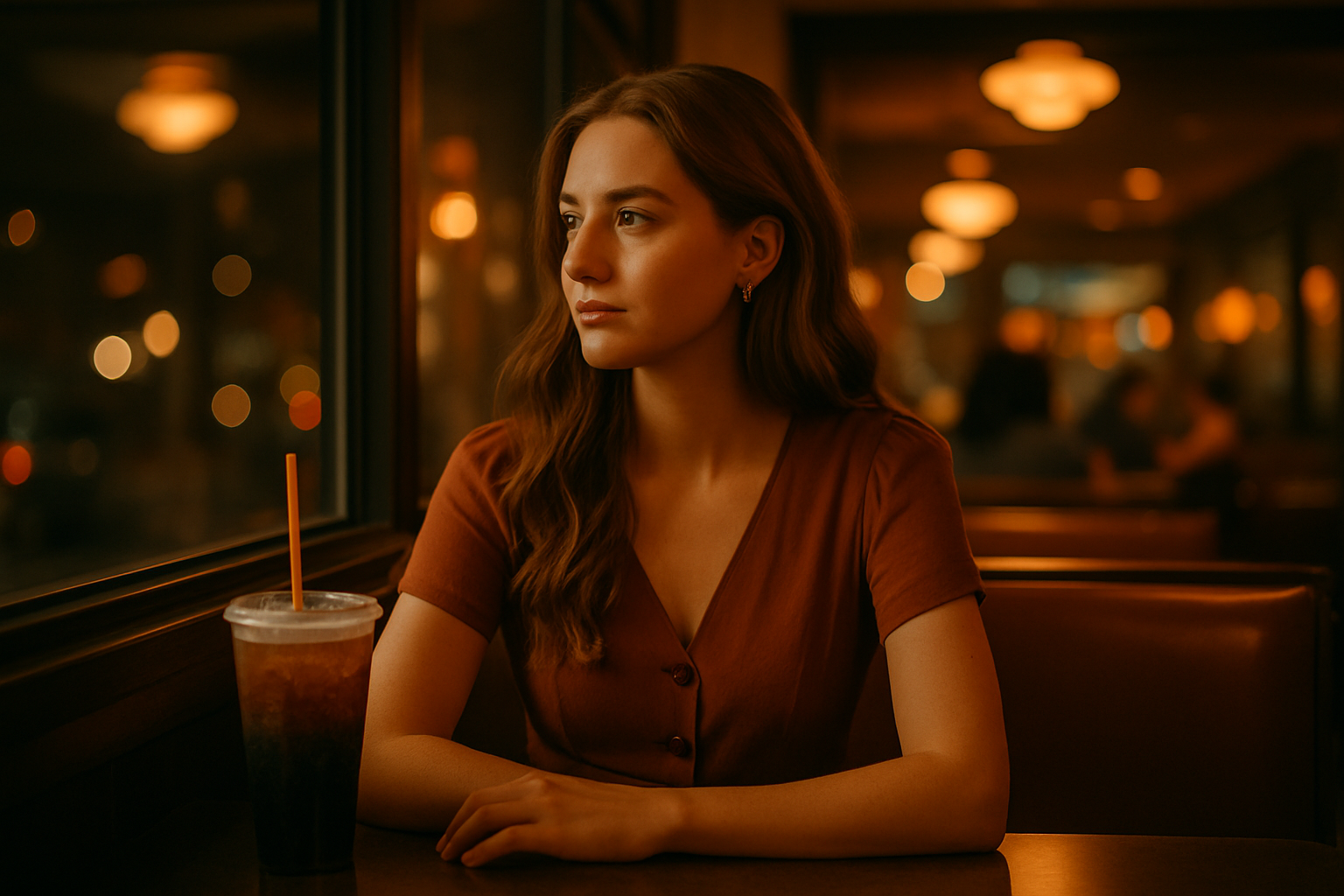
At nine on a weeknight the drive-through line at a Provo soda shop runs ten cars deep, and a fair share of those cars are dates. The dirty soda, a fountain drink dressed with cream and syrup and lime, is Utah County’s answer to the cocktail, invented for a population that does not drink alcohol or…
Comments
टिप्पणी करने के लिए जुड़ेंटिप्पणी करने वाले पहले बनो।