Dating as a Woman in Jerusalem: Between Worlds, On Your Terms
L'Amore Vince: The Best Dating App For Single Working Professionals In Jerusalem
A City That Holds Ten Worlds at Once
Jerusalem does not function like one city. It functions like a dozen cities pressed together at the seams, each with its own social code, its own language of courtship, and its own unspoken rules about what a woman owes a man when she accepts a coffee. You can walk from Mahane Yehuda market into Nachlaot and feel the entire atmosphere of romantic possibility shift within three minutes. You can be in Baka on a Thursday evening surrounded by secular thirty-somethings at a wine bar, then take the 18 bus toward Geula and watch the world transform completely. No other city in the world asks women to hold this many contradictions simultaneously, and that complexity shapes dating here in ways that are both exhausting and, sometimes, surprisingly beautiful.
If you are a woman trying to date in Jerusalem, you already know what outsiders do not: this is not Tel Aviv. The comparison is made constantly and it is mostly useless. Tel Aviv is secular, coastal, permissive. Jerusalem is layered. A neighborhood like Rehavia — historically home to professors, lawyers, and old German-Jewish families — carries a kind of intellectual formality to its social rituals. A first meeting there often feels more like a job interview at a café than a date. Meanwhile, in the German Colony, where young secular Israelis and international residents mix freely along Emek Refaim Street, the norms swing closer to what you might find in a European capital, though even there, family expectations hover at the edges of every conversation.
The Pressure That Is Specific to This Place
Jerusalem has one of the youngest median populations of any major city in the developed world, driven largely by its large ultra-Orthodox and national-religious communities. That demographic fact has a direct effect on secular and traditional women dating here. The marriage clock ticks louder in Jerusalem than almost anywhere else in Israel. In Kiryat Moshe or Ramat Eshkol, a woman in her late twenties who is not yet engaged is often fielding questions from neighbors and family that would feel extraordinary in most Western cities. Even in more mixed neighborhoods like Talpiot or Arnona, the ambient cultural pressure to be coupled is impossible to fully escape.
There is also the question of social overlap. Jerusalem is a small city — around one million people, but functionally much smaller in the social circles that actually intersect. Everyone knows someone who knows someone. A bad date in Jerusalem has a longer half-life than a bad date in a larger, more anonymous city. Women here often describe a particular kind of caution: not paranoia, but a careful management of visibility. You think twice before agreeing to meet someone at a café in your own neighborhood, because you may well see that person again at the shuk, at a Friday night dinner, at a mutual friend's wedding. The social cost of a mismatch is higher here.
The Photo Problem
Photo-first dating apps create a specific kind of difficulty for women in Jerusalem that is worth naming plainly. The city's diverse religious and cultural landscape means that a woman's appearance — how she dresses, whether she covers her hair, the religious signals embedded in how she presents herself — becomes an instant sorting mechanism before a single word is exchanged. For secular women, photos can attract men from communities whose expectations they do not share. For traditionally observant women, a profile photo can feel like a violation of privacy in itself, particularly in communities where modest presentation is meaningful and personal. The idea of your image circulating freely through a swiping interface, evaluated by strangers, is not abstract discomfort — it is a real cultural and sometimes religious concern.
"I do not want to be a face on a screen for someone to swipe past. I want to be heard first. In Jerusalem, who you are is so much more than what you look like, and most apps do not understand that at all." — a woman in her early thirties living in Nachlaot
What Actually Works Here: Connection Before Appearance
The most enduring romantic connections in Jerusalem tend to share a pattern: they were built on conversation first. This is partly cultural inheritance. The tradition of shidduch matching, practiced across many Jewish communities, operates entirely on the principle that character, values, family background, and personality are evaluated before a face is ever put to a name. Even secular Jerusalemites who would never use a formal matchmaker often find, when they reflect honestly, that their most meaningful relationships started with long conversations — at Ulpan, at a friend's Shabbat table, over shared politics at a protest on Kaplan Street, in the study halls of a yeshiva or a secular study group.
Jerusalem women who navigate the secular-traditional spectrum — the so-called dati-leumi and masorti communities of places like Har Nof, Gilo, or the mixed pockets of Pisgat Ze'ev — often describe wanting something that most dating platforms do not offer: a way to establish genuine compatibility before the visual layer enters the picture. They want to know if someone shares their sense of what Friday evenings mean, their relationship to the Hebrew calendar, their feelings about where to raise children and in which kind of home. None of that lives in a photograph.
Safety Is Not Optional — It Is the Baseline
Any honest conversation about dating as a woman in Jerusalem has to include safety. Jerusalem is a city with a complex security environment, and beyond that larger reality, women here face the same universal risks that women everywhere face in meeting strangers from the internet. The culture of social visibility — the fact that everyone knows everyone — provides a certain natural accountability, but it is imperfect and it does not protect against outsiders or against men who move between different social circles. Women in Jerusalem describe specific precautions as routine:
Meeting for the first time only in daylight hours, in busy public spaces like the Ben Yehuda pedestrian mall or the First Station complex in the German Colony.
Sharing details of a first meeting with a trusted friend or family member before going.
Delaying the sharing of a real phone number until after a significant degree of trust has been established.
Being cautious about men who claim a shared social network but cannot be verified through it.
These are not neurotic precautions. They are sensible ones, and they reflect the fact that the burden of safety management falls disproportionately on women. Any platform a Jerusalem woman chooses to use needs to take verification seriously — not as a marketing feature, but as a structural commitment.
The Quiet Revolution of Knowing Someone Before Seeing Them
There is something specifically Jerusalem about the idea that you might fall for a voice before a face. The city has always been a place where language carries extraordinary weight — where a single word in Hebrew or Arabic or Aramaic can hold centuries of meaning, where the way someone speaks about their faith or their doubt or their grandmother's kitchen tells you more than any photograph. Women here who have dated seriously describe the moments that actually mattered: not the first time they saw someone, but the first time a conversation went somewhere unexpected, when the script fell away and something real began.
That instinct — to let substance come first — is exactly what L'Amore Vince is built around. The app's progressive reveal structure starts with text conversation, then moves to voice, then video, then contact exchange, each step only when both people choose to continue. Nobody sees anyone until trust has already begun to form. A compatibility score built from personality questions rather than photos does the early sorting, so what surfaces first is values, character, and genuine fit. The daily liveness check-in means every person you are talking to has been verified as a real person, building a visible streak that confirms they showed up again today — something that matters enormously in a city where the line between a real connection and a performative one can be hard to read. And when the moment comes to exchange contact details, a masked forwarding number means you never have to hand your real number to someone you have not yet fully chosen to trust. In a city like Jerusalem, where social caution is both a cultural inheritance and a practical necessity, that is not a gimmick. It is the design of something that actually respects what women here have always known: that who someone is matters far more than how they look, and that safety is not a feature — it is the foundation.
منشورات ذات صلة

Dating in El Paso as a Woman: The City That Walks You Home
By late Sunday afternoon in El Paso the grill smoke stands over whole neighborhoods at once, the Lower Valley, the Northeast, the westside cul-de-sacs, and inside that smoke, at folding tables in backyards, sits the institution that actually governs a woman’s romantic life here: her grandmother.…

Dating in Portland, Maine as a Woman: Small Harbor, Long Memory
On a Saturday night in July, Wharf Street is wall to wall with bachelorette parties, sashes and matching shirts and men down from elsewhere shouting compliments that nobody requested, and a Portland woman threading through it is usually on her way somewhere else. Come back to the same cobblestones…
Dating in Provo as a Woman: The Ward Calendar and the Dirty Soda
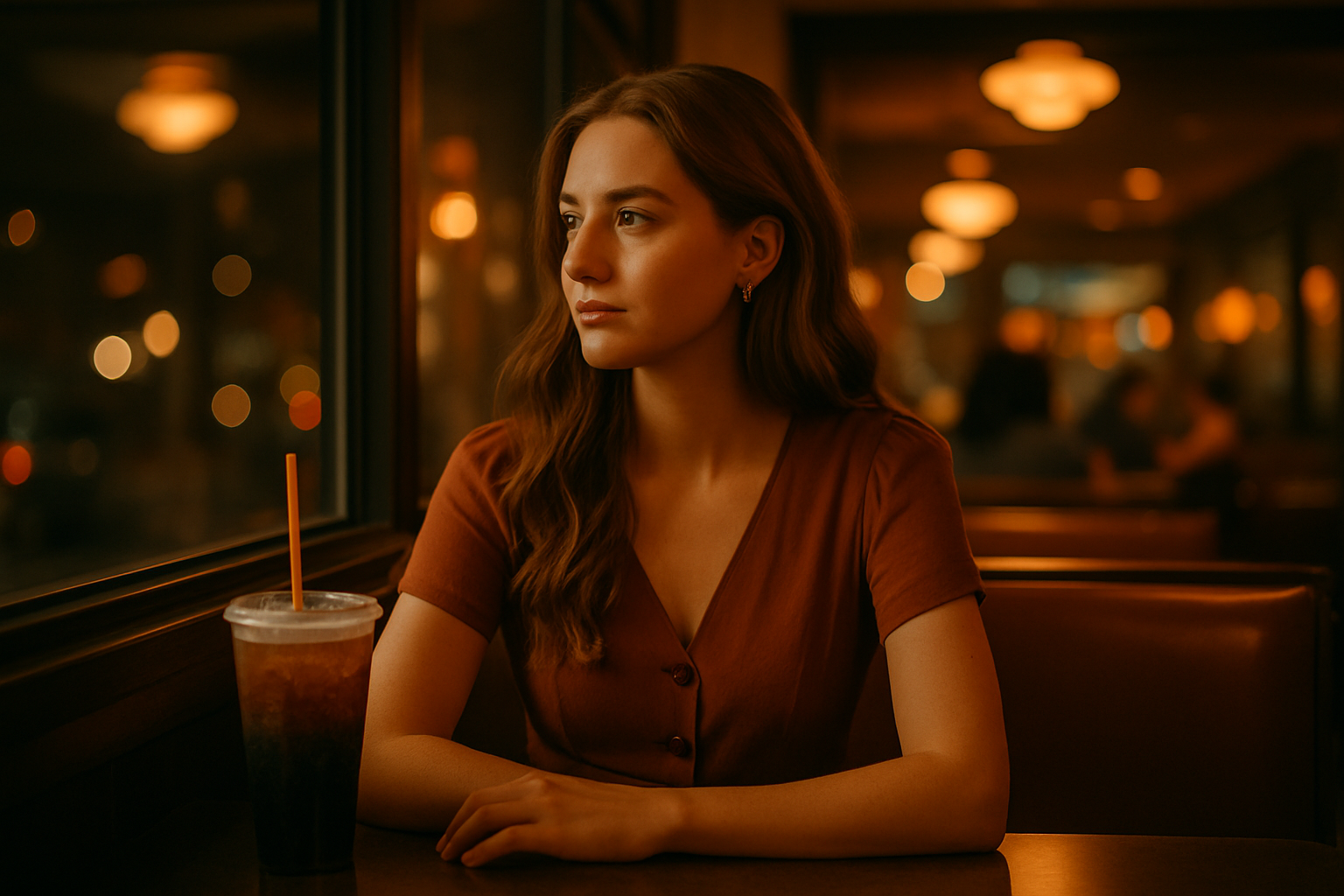
At nine on a weeknight the drive-through line at a Provo soda shop runs ten cars deep, and a fair share of those cars are dates. The dirty soda, a fountain drink dressed with cream and syrup and lime, is Utah County’s answer to the cocktail, invented for a population that does not drink alcohol or…
Comments
انضم إلينا للتعليقكن أول من يعلق.