Dating as a Woman in Barcelona: The Unwritten Rules
L'Amore Vince: The Best Dating App For Single Working Professionals In Barcelona
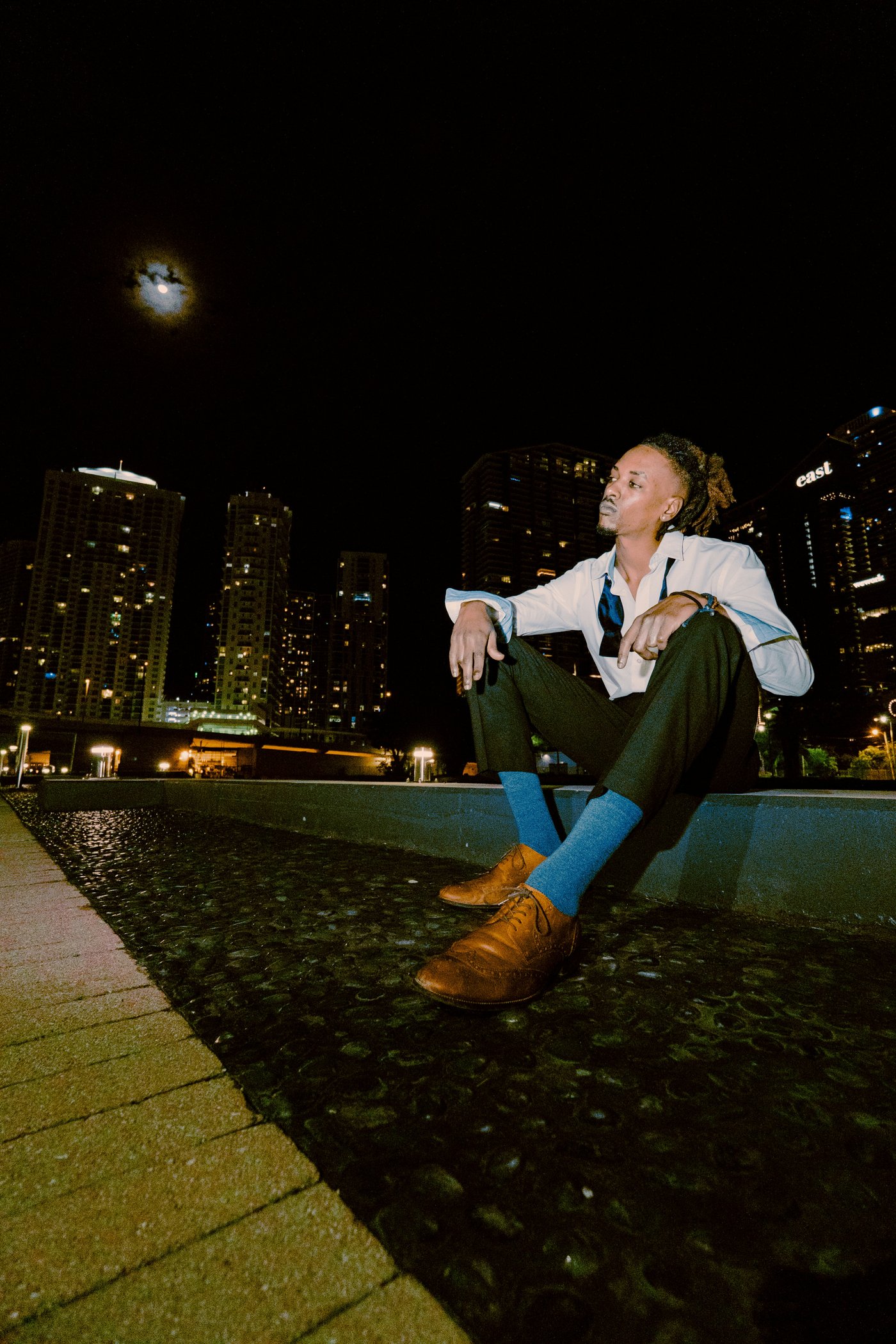
A city that moves on its own clock
Barcelona does not date the way the rest of Europe does, and it certainly does not date the way dating advice columns assume. The city runs on a social rhythm that starts late, accelerates slowly, and treats urgency as a form of rudeness. If you moved here from London, Berlin, or New York expecting the directness of those dating cultures, you have probably already been confused by someone who texted enthusiastically for two weeks and then invited you to a group dinner in Gràcia as a third date — surrounded by eight of their friends, speaking rapid Catalan, and somehow considering this entirely normal intimacy.
For women navigating romance in this city, the landscape is layered. There is the Barcelona of the locals — the barcelonins who grew up in Sant Andreu or Sarrià, who have friend networks that double as vetting committees, and who build romantic interest slowly through repeated presence in shared social circles. And then there is the Barcelona of the expats, the digital nomads, the Erasmus students in the Eixample, and the tourists passing through El Born who mistake the warmth of a Sunday afternoon in the Barceloneta chiringuito for something more personal than it is. Dating here means learning which version of the city you are actually in on any given night.
The neighborhood shapes the dynamic
Where you are in Barcelona is not incidental to your dating life — it is almost definitional. The Eixample, especially the stretch between Passeig de Gràcia and Universitat, is dense with younger professionals and a heavy app-dating culture. First dates here happen at aperitivo bars that serve vermouth at noon and close at 2am, and the conversation often has the polished, slightly rehearsed quality of someone who has done this many times before. It is efficient, cosmopolitan, and frequently shallow.
Cross into Gràcia and the energy shifts. This is the neighborhood of the mesón familiar and the plaça gathering, where people know their neighbors and introductions still happen through friends. Women who live here or spend time here often describe a more organic dating culture — slower, more communal, less transactional — but also one that can feel exclusionary if you are not already woven into the local social fabric. Poblenou, further east along the coast, has become Barcelona's tech and creative corridor, which brings its own mix: genuinely interesting people who are nonetheless often only in the city for eighteen months at a time.
And then there is the Gothic Quarter and El Raval — neighborhoods that are visually stunning and socially chaotic, where the density of tourism means that unsolicited attention on the street is a near-daily reality for women. The approach culture in these areas can be exhausting precisely because it is indiscriminate. It is not romantic. It is a numbers game being played by strangers, and most women in the city learn to navigate it with a particular kind of quiet armor.
What women in Barcelona actually deal with
The specific challenges women face dating in Barcelona are not dramatic — they are more like a low-grade friction that accumulates. A few that come up repeatedly in honest conversation:
The tourist-local divide is invisible until it isn't. A man who seemed like a resident turns out to be leaving in two weeks. This is not unique to Barcelona, but it is uniquely concentrated here — the city's desirability as a destination means a significant portion of the eligible dating pool is genuinely transient.
The warmth misread problem. Catalan and Spanish social warmth — the easy physical affection, the eye contact, the attention — is a cultural baseline, not a personal signal. Women who are not from here often spend the first year recalibrating what genuine interest looks like versus ambient friendliness.
App fatigue with a specifically Barcelonin flavor. The popular photo-based apps here skew heavily toward appearance-first filtering, and for many women this creates a match pool that feels disconnected from what the city is actually like in person — richer, more textured, more worth talking to.
The safety calculus of handing out your number. Spain has a strong culture of persistent follow-up that can veer into pressure. Women here are often extremely cautious about when and how they share contact details, and with good reason. The standard phone number exchange that apps push as a success metric can feel less like progress and more like exposure.
The language layer. Even with good Spanish, the bilingual Catalan-Castilian reality of the city means social fluency is harder to achieve than linguistic competence. Humor, irony, and emotional nuance often get lost — especially in early dating contexts — which makes text-only interaction particularly limited.
What Barcelona gets right about connection
It is worth saying clearly: Barcelona, at its best, is one of the most genuinely romantic cities in the world — not in a postcard sense, but in the sense that it actively supports lingering. The long dinners that start at 9:30pm in Poble Sec and end at 1am because nobody thought to check the time. The Sunday morning walks through the Mercat de Santa Caterina that turn into three hours of wandering and talking. The culture of the sobremesa — that untranslatable Spanish habit of remaining at the table long after the meal is finished, just to keep the conversation alive — is, when you experience it with the right person, one of the better arguments for slowing down.
Barcelona rewards the people who are willing to stay at the table. The city is not interested in whoever leaves first.
This is a city where the quality of conversation is still considered a seductive act. Where someone who can argue passionately about FC Barcelona versus RCD Espanyol, or about whether Modernisme peaked with Domènech i Montaner rather than Gaudí, is genuinely more interesting than someone who looks good in a photo. The culture, when it is not distorted by mass tourism, values personality. It values presence.
The case for getting to know someone before you see them
This is why a growing number of women in Barcelona — locals, long-term residents, and newcomers alike — have started gravitating toward approaches to dating that front-load personality rather than appearance. Not because looks are irrelevant, but because the photo-first model is particularly poorly suited to a city where the real attraction is nearly always in the conversation, and where a face on a screen tells you almost nothing about whether someone is actually worth your Sunday morning.
L'Amore Vince was built on exactly this premise. You match on compatibility — answers to personality questions generate a score — and then you meet in stages: text first, then voice, then video, then contact exchange. You hear someone's voice before you see their face. You understand their sense of humor, their pace, their emotional register before appearance enters the picture. Either person can pass between rounds; consent is built into the structure. For women particularly cautious about number-sharing, the platform offers a masked forwarding number so contact exchange never means handing a stranger your real digits.
The daily liveness check-in — a quick face verification that builds a visible verified streak on every profile — means that the person you are talking to in round one of text is a real, confirmed human being, not a bot or a catfish running a script. In a city where the transient population is high and the photo-based apps have normalized a certain amount of performance and deception, that baseline verification matters more than it might somewhere else.
For women dating in Barcelona who are tired of the surface-level churn, tired of the tourist-or-local guessing game, tired of handing out their number before they have any real sense of who they are handing it to — the progressive reveal model is not a gimmick. It is closer to how the best connections in this city have always worked: slowly, through conversation, over a very long dinner that nobody wanted to end.
Articoli correlati
Dating in El Paso as a Woman: The City That Walks You Home
By late Sunday afternoon in El Paso the grill smoke stands over whole neighborhoods at once, the Lower Valley, the Northeast, the westside cul-de-sacs, and inside that smoke, at folding tables in backyards, sits the institution that actually governs a woman’s romantic life here: her grandmother.…
Dating in Portland, Maine as a Woman: Small Harbor, Long Memory
On a Saturday night in July, Wharf Street is wall to wall with bachelorette parties, sashes and matching shirts and men down from elsewhere shouting compliments that nobody requested, and a Portland woman threading through it is usually on her way somewhere else. Come back to the same cobblestones…
Dating in Provo as a Woman: The Ward Calendar and the Dirty Soda
At nine on a weeknight the drive-through line at a Provo soda shop runs ten cars deep, and a fair share of those cars are dates. The dirty soda, a fountain drink dressed with cream and syrup and lime, is Utah County’s answer to the cocktail, invented for a population that does not drink alcohol or…
Comments
Unisciti per commentareSii il primo a commentare.