Dating as a Woman in Shanghai: Beneath the Neon and the Noise
L'Amore Vince: The Best Dating App For Single Working Professionals In Shanghai China
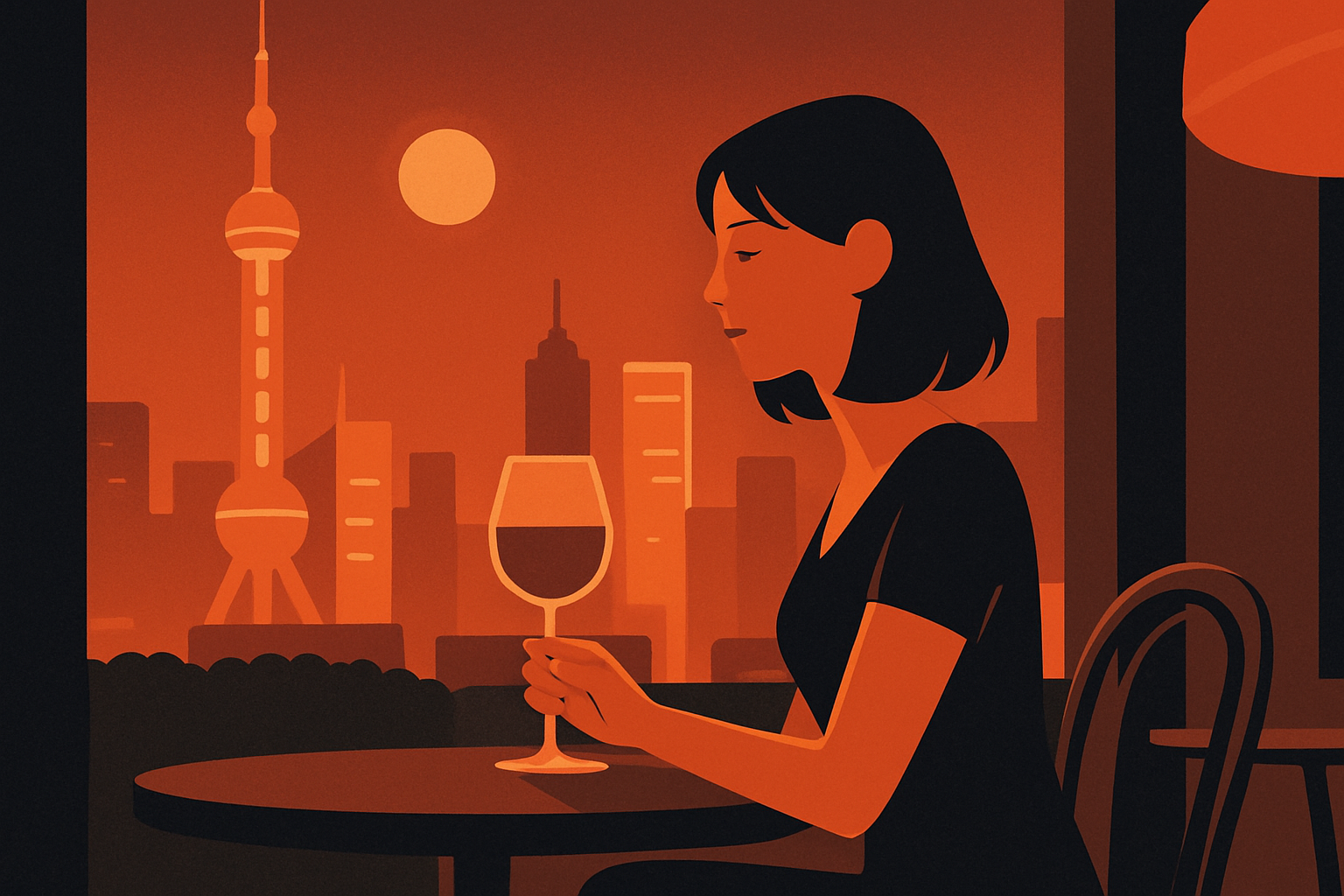
The City That Rewrites Its Own Rules Every Five Years
Shanghai is not China, and Shanghainese will be the first to tell you so. This is a city that has been cosmopolitan, colonial, communist, and capitalist within living memory — a place where a woman can walk home alone at 2 a.m. through the French Concession without a second thought, yet still find herself sitting across from a man who, between bites of soup dumplings at a Din Tai Fung on Xintiandi, will ask whether she plans to have children before he asks what she does for work. The contradictions are not bugs in Shanghai's social operating system. They are the operating system.
For women dating in this city — whether they are local Shanghainese, migrants from Henan or Sichuan, or expats navigating a culture they will never fully read — the romantic landscape is layered in ways that no app designed for Brooklyn or Berlin has ever had to reckon with.
The Pressure That Lives in the Elevator
The most reported source of dating anxiety among women in Shanghai is not a bad date. It is the elevator ride back up to the family apartment. The concept of 剩女 (shèngnǚ) — "leftover woman," a government-era label for educated, unmarried women over 27 — still carries social weight in ways that would strike outsiders as absurd given Shanghai's actual demographics. Women with master's degrees and corner offices in Pudong finance towers report being told by relatives that their success is the reason they are alone. The message is efficient and brutal: your ambition has an expiration date, and it is approaching.
This pressure does something specific to how women date here. It can produce two seemingly opposite behaviors that are actually the same self-protective move: an urgency to assess a man's marriage intentions within the first few weeks, or a determined retreat from dating apps altogether in favor of introductions through trusted social circles — the colleague's friend, the university alum in the same WeChat group. Both strategies are about managing exposure. If you never appear on an app, you cannot be quietly screenshotted, discussed, or judged by anyone outside your network.
Where the City Actually Does Its Romantic Work
Shanghai romance has geography. The French Concession — Wukang Road, Anfu Road, the stretch of Fuxing Road where parasol trees close over the street like a cathedral ceiling — functions as the city's designated romantic backdrop. Couples walk here the way people in other cities walk along rivers. First dates happen at wine bars tucked into lane houses on Yongkang Road, over cold brew at one of the independent cafes on Changle Road, or at the weekend flower market in Jing'an where buying someone a single stem of something is a gesture that costs almost nothing and means exactly enough.
But the French Concession is also curated. It is where people bring their best-presented selves. The rawer, more honest social life of the city happens elsewhere — in the underground music venues of Yuyintang in Changning, in the sprawling hotpot restaurants of Hongkou where the noise alone forces a kind of intimacy because you have to lean in to be heard, in the early morning parks of Jing'an where retirees dance and the pace of the city briefly drops to something human. A woman trying to understand who a man actually is, as opposed to who he presents in the Concession, is trying to access a different city.
The Specific Dynamics Local Women Navigate
The fángzi question. Property ownership in Shanghai is existentially entangled with marriageability. A man who does not own an apartment in a city where a modest flat in Putuo or Baoshan easily costs three million RMB is at a structural disadvantage that is discussed openly, clinically, and constantly. Women are frequently advised by family that love without a property deed is a risk they cannot afford. Many women privately disagree and say nothing.
The local-versus-migrant divide. Shanghainese identity is among the most particular regional identities in China. A woman whose family has been in the city for three generations will sometimes face quiet pressure not to marry someone from outside the Yangtze Delta. This is rarely stated as discrimination; it is framed as cultural compatibility. The framing does not make it less real.
The expat variable. Shanghai has one of the largest expat populations in Asia, concentrated in Jing'an, Xuhui, and Changning. Dating across that boundary — Chinese woman, foreign man, or the reverse — activates a specific set of assumptions from both families and strangers. The woman is often read as either status-seeking or naive. The scrutiny is asymmetric: it falls harder on her.
App safety and screenshot culture. Domestic Chinese dating apps have minimal verification infrastructure. Women regularly report profiles with recycled photos, men presenting false professional credentials, and the knowledge that any photo shared can immediately be distributed. The result is a deep, rational caution about digital disclosure — women who will not send a selfie until they have established significant trust, and who consider this policy, correctly, as common sense.
What Shanghai Women Actually Say They Want
"I want to know if someone is interesting before I have to worry about whether he thinks I'm pretty enough. That order of events doesn't exist here yet."
This is something a thirty-one-year-old architect said in a conversation about dating apps, but it could have been said by almost anyone. The complaint is structural: every mainstream platform begins with appearance and arrives at character only if the appearance clears the bar. For women who have spent years being evaluated visually — in job interviews where physical presentation is explicitly noted, in family dinners where weight is commented on with the casualness of a weather report — the prospect of being reduced to a thumbnail image in a romantic context is not abstract. It is exhausting.
There is also a specific desire for verified reality. Women in Shanghai have become sophisticated readers of fabricated digital personas precisely because they have had to be. The wish is not for a perfect match. The wish is for a real one — a person whose existence they can trust before they invest anything.
When a Different Approach Lands Differently Here
The concerns Shanghai women describe — about leading with looks, about unverified strangers, about losing control of their own image, about being forced into a vulnerable position before trust is built — are not unique to this city, but they are acute here, sharpened by the specific pressures of this place.
This is part of why L'Amore Vince was designed the way it was. The platform's reveal model moves through stages — text first, then voice, then video, then contact exchange only if both people want it — which means no one sees you before they know something real about you. The compatibility score is built from personality questions, not photographs. Verification happens through a daily liveness check-in that builds a visible streak, so the person you are talking to is provably real and provably present — not a recycled photo, not a borrowed identity, not someone who passed a single check six months ago and has been coasting since. If contact exchange does happen, there is a masked forwarding option so a real phone number never has to leave a woman's hands on the basis of a few conversations alone.
None of that solves Shanghai's property market or the shèngnǚ narrative or the complicated math of cross-cultural relationships in a city that is still working out what it wants to be. But it does change one thing: the order of events. Character before appearance. Verified presence before a single image is shared. Consent at each step, with the option to pass at any point, so no stage of the process feels like a trap.
For women who are tired of performing prettiness for strangers before the stranger has earned so much as a minute of their time, that reordering is not a small thing. In a city that rewrites its own rules every five years, it might even feel like the beginning of something.
Ähnliche Beiträge

Dating in El Paso as a Woman: The City That Walks You Home
By late Sunday afternoon in El Paso the grill smoke stands over whole neighborhoods at once, the Lower Valley, the Northeast, the westside cul-de-sacs, and inside that smoke, at folding tables in backyards, sits the institution that actually governs a woman’s romantic life here: her grandmother.…

Dating in Portland, Maine as a Woman: Small Harbor, Long Memory
On a Saturday night in July, Wharf Street is wall to wall with bachelorette parties, sashes and matching shirts and men down from elsewhere shouting compliments that nobody requested, and a Portland woman threading through it is usually on her way somewhere else. Come back to the same cobblestones…
Dating in Provo as a Woman: The Ward Calendar and the Dirty Soda
At nine on a weeknight the drive-through line at a Provo soda shop runs ten cars deep, and a fair share of those cars are dates. The dirty soda, a fountain drink dressed with cream and syrup and lime, is Utah County’s answer to the cocktail, invented for a population that does not drink alcohol or…
Comments
Jetzt mitmachen und kommentieren!Sei der Erste, der einen Kommentar abgibt.