Dating as a Woman in London: The City That Tests Your Patience
L'Amore Vince: The Best Dating App For Single Working Professionals In London
A City That Promises Everything and Delivers on Its Own Terms
London will seduce you before it exhausts you. It has twelve million people, a thousand neighbourhoods with their own accents and attitudes, and a dating culture so layered in contradiction that women who have navigated New York, Paris, and Sydney will still find themselves caught off guard somewhere between a Peckham bar and a Hampstead Heath Sunday walk that was somehow not a date. Or was it? Nobody said.
Dating as a woman in this city is a specific experience. Not universally terrible, not universally wonderful — specific. And specificity is what the generic advice columns always miss.
The Ambiguity Problem Is Real and It Has a Postcode
Ask any woman who has dated in London for longer than a year and she will tell you about the hang-out that was not a date, the date that was not a relationship, and the relationship that was never quite named. British reserve — particularly strong among men raised in the south of England — combines with a London-specific social anxiety to produce situations of almost heroic vagueness. He suggested Brockwell Lido at sunrise. He paid. He texted for a week. He vanished.
The problem is structural as much as personal. London is a city of arrivals. Shoreditch, Brixton, Bermondsey, Hackney — neighbourhoods that are home to enormous populations of people who moved here in their twenties for work or ambition or escape, and who carry a low-grade sense of impermanence. Leases end in twelve months. Contracts roll on a quarterly basis. The unofficial social contract in much of Zone 2 is: enjoy it, don't grip too tight.
For women who want something real, that culture is genuinely hard to work against. You are not imagining it.
The Commute Is a Relationship Killer
Geography in London is not just geography — it is a psychological barrier. A woman in Walthamstow and a man in Tooting are, by the Tube map, about forty minutes apart. By the felt experience of a Tuesday evening, they are in different cities. The Elizabeth line changed some of this. The Northern line, famously, changed nothing. When someone says they live in Barnet and you live in Clapham, you both already know what that means for a third date.
This creates a hyper-local dating culture where apps are simultaneously the only practical way to meet people across the city and a source of deep frustration, because the person with the perfect profile lives in Croydon and you are not, if you are honest with yourself, going to make that journey on a Wednesday night after work.
What London Women Actually Told Us
We spoke to women across the city — in Dalston, in Richmond, in Elephant and Castle, in Kilburn — and heard the same themes with enough consistency to write them down.
"The first question is always what do you do. Not in a gold-digger way. London just sorts itself by career because that's the only shared language. It's exhausting to be evaluated by your job title before your name has landed."
"I've been on forty-first dates that were essentially job interviews held in natural wine bars in Islington. I can perform perfectly. Nothing comes of it."
"The safety thing is real. I won't meet someone from an app unless I've done a lot of vetting first. I've had men send photos of other men. I've had men who were just completely different people. London is anonymous in a way that feels dangerous sometimes."
"Nobody asks you on an actual date. They say let's hang. And then you have to figure out whether you're being asked out or just filling their evening."
"There's a huge international community here and dating across cultures in London is genuinely wonderful when it works and a complete communication disaster when it doesn't, because everyone thinks they're speaking the same language."
The Photo Problem Is Worse Here Than People Admit
London's dating app culture is dominated by a very particular kind of profile. Rooftop bar. Skiing holiday. Half-marathon medal. Coachella. The visual performance of a London life is so refined that photographs have become almost useless as information. Everyone looks like they are having a wonderful time because everyone has learned how to photograph as though they are having a wonderful time. The photos tell you nothing except that this person owns a decent camera or has a friend who does.
More dangerously: they are frequently not even the person. Catfishing is not a fringe problem in a city this large and this anonymous. And even when the photos are real, they are so heavily selected and filtered that the person who arrives at the pub in Borough Market is a stranger to the person whose face you spent a week studying on your phone.
The cruelty of photo-first apps in a city like London is that they filter for performance, not for person. The most interesting women and the most interesting men are frequently the worst at personal marketing. And the best personal marketers are frequently the emptiest rooms.
What Actually Works: Talking First
Every woman we spoke to described a version of the same thing when they talked about connections that went somewhere real. They talked first. Not swiped, not photo-evaluated — talked. The conversations that started with something real, a question that required more than a one-word answer, an exchange that revealed something unexpected — those were the ones that turned into actual relationships.
This is not sentimental nostalgia for some golden age of romance. It is practical information about how genuine connection forms. Attraction built through conversation is stickier, more robust, and more likely to survive the first in-person meeting than attraction built through a photograph. A photo can disappoint. A voice — a real voice, with its particular rhythm and the way someone laughs — is much harder to fake and much harder to forget.
Safety Is Not a Preference in London — It's a Requirement
The women we talked to in Hackney and in Hammersmith said the same thing: knowing who you are actually talking to matters more than anything else. London's size makes it easy to fabricate an identity. The accountability that exists naturally in smaller cities — you know his sister, you went to the same school, you have seven mutual friends — simply does not exist here for most people. You are talking to a stranger, genuinely.
Which means that any platform that takes verification seriously is not offering a feature — it is offering something foundational.
Where L'Amore Vince Fits Into This
We built L'Amore Vince specifically because the photo-first model was producing exactly the experiences described above: exhausting, shallow, and unsafe. The app's approach — text conversation first, then voice, then video, then contact exchange — maps almost exactly onto what the women we interviewed described doing instinctively when they had their best experiences. They talked. They listened. They formed an impression before they formed a visual judgment.
The daily liveness check-in, which asks every user to complete a quick face-verification each day and builds a visible verified streak on their profile, exists precisely because of what women in London told us about safety. You know who you are talking to. Not their best photo from three years ago. Not a carefully constructed fiction. A real, verified person, confirmed today.
The masked forwarding number at the contact exchange stage — where you can share a way to reach you without handing over your actual number — came from the same place. Moving from app to real contact should not require a leap of faith that puts your personal information in the hands of someone you have known for a week.
Compatibility on L'Amore Vince is computed from personality questions, not photographs. The score you see next to a match reflects something about who they are, not what they look like or how good their holiday photos are. In a city that sorts people relentlessly by surface — by postcode, by career, by the neighbourhood they can afford to live in — that feels like a small but meaningful act of resistance.
London does not make romance easy. But it makes the real thing, when you find it, feel genuinely earned. We think the best tools for finding it should work the same way: layer by layer, with full consent at every step, and without asking you to judge a person before you have heard them speak.
Ähnliche Beiträge

Dating in El Paso as a Woman: The City That Walks You Home
By late Sunday afternoon in El Paso the grill smoke stands over whole neighborhoods at once, the Lower Valley, the Northeast, the westside cul-de-sacs, and inside that smoke, at folding tables in backyards, sits the institution that actually governs a woman’s romantic life here: her grandmother.…

Dating in Portland, Maine as a Woman: Small Harbor, Long Memory
On a Saturday night in July, Wharf Street is wall to wall with bachelorette parties, sashes and matching shirts and men down from elsewhere shouting compliments that nobody requested, and a Portland woman threading through it is usually on her way somewhere else. Come back to the same cobblestones…
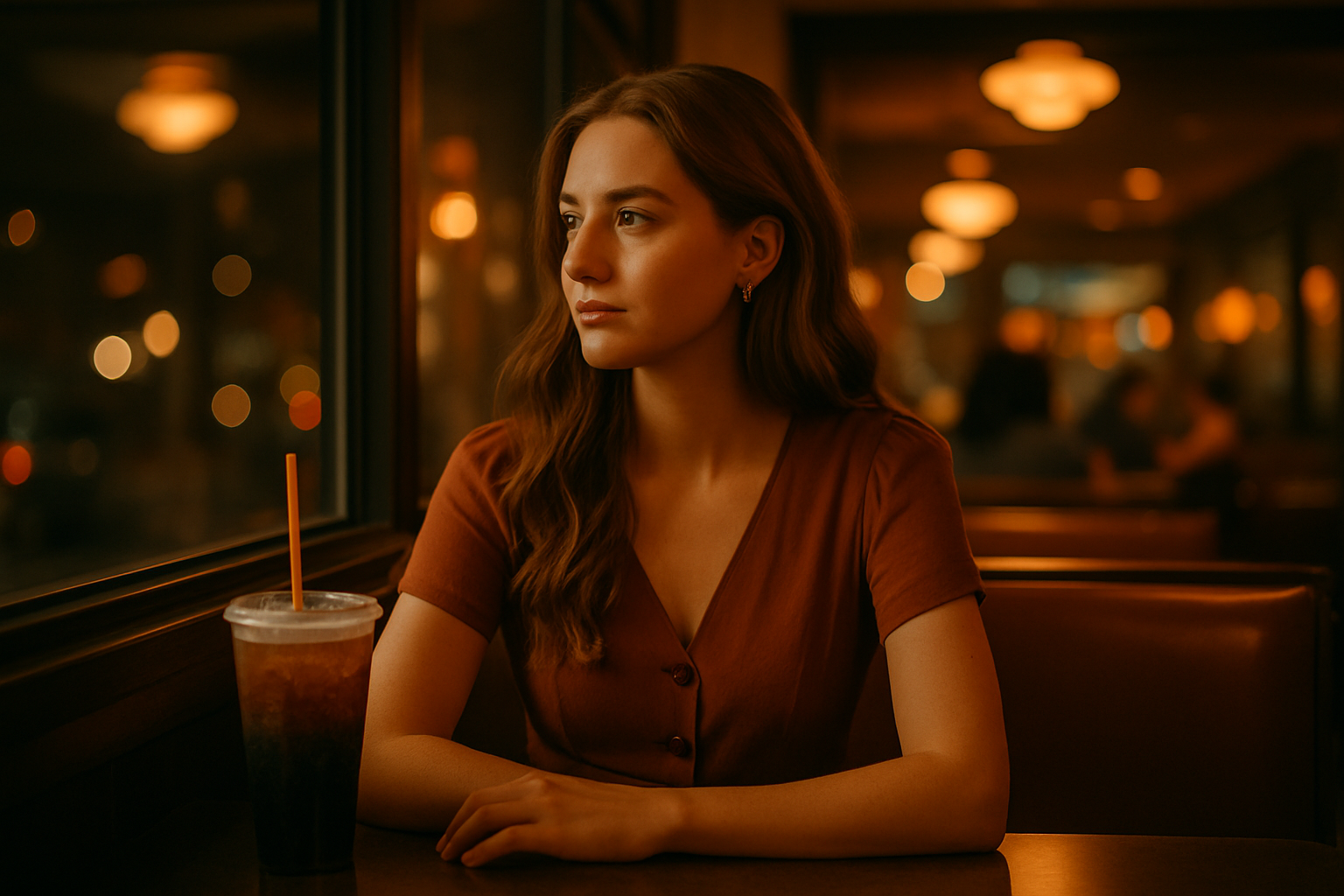
Dating in Provo as a Woman: The Ward Calendar and the Dirty Soda
At nine on a weeknight the drive-through line at a Provo soda shop runs ten cars deep, and a fair share of those cars are dates. The dirty soda, a fountain drink dressed with cream and syrup and lime, is Utah County’s answer to the cocktail, invented for a population that does not drink alcohol or…
Comments
Jetzt mitmachen und kommentieren!Sei der Erste, der einen Kommentar abgibt.